As I can personally attest to, living with lower back pain means even simple movements can feel loaded with risk. Some days are better than others for me, but I really never know when a bad day might arise. Even with strength training, physical therapy and being careful with how I bend or twist, there's always a risk at reaggravating my back.
Sitting, standing, bending to pull on pants, or reaching to fasten a waistband can all trigger jolts of pain that ruin my day. When people search for the best thing for lower back pain, they often focus on heating pads, cushions, or stretches, but the clothes you wear, especially your pants, are an overlooked piece of back pain care that can either reduce strain or quietly make things worse.
In this article, we will walk through how lower back pain changes the way you move, why traditional pants can be a problem, and what to look for in adaptive clothing for daily living. We will also cover other lower back pain relief products worth knowing about, so you have a fuller picture of what real back pain care can look like day to day.
At Joe & Bella, we specialize in modern, adaptive clothing designed for older adults and anyone with limited mobility or dexterity, and we care deeply about making everyday dressing less painful and more dignified.
How Lower Back Pain Changes the Way You Dress
Lower back pain has many causes, from herniated discs and arthritis to muscle strain, sciatica, or simply the wear and tear of aging. Whatever the cause, the impact on daily movement is often similar: pain, stiffness, or weakness that shoots through your lower back, hips, or legs. Movements that compress or twist the spine, like bending to the floor or twisting at the waist, often feel sharply painful.
That pain shows up in your dressing routine. Pulling pants over your feet can require bending more than your back can safely handle. Standing on one leg to step into a narrow pant leg challenges your balance, especially if you already feel unsteady. Reaching behind to yank a tight waistband into place forces your spine into awkward positions that can easily flare symptoms.
Traditional pants are simply not designed with this in mind.
Adaptive pants for back pain include features like:
- Stiff, low-rise waistbands
- Small, tricky buttons or zippers
- Narrow leg openings that require deep bending
- Heavy fabrics that bunch and tug when you sit can all increase strain and even raise fall risk.
On top of the physical pain, there is the emotional impact. Needing help just to get dressed can feel frustrating and discouraging. Many people worry that accepting assistance means losing independence altogether, when really, a better clothing design can reduce how much help they need.
Features That Make Pants Back-Friendly and Low-Pain
When your back hurts, "good pants" are about much more than style or color. The right design choices can reduce pressure on sensitive areas and make dressing easier from the first step to the last tug at the waistband.
A higher-rise, supportive waistband is usually gentler on a painful lower back than a low-rise cut that digs into the hips. A higher rise lets the waistband rest at a more natural point on your torso, which can help distribute pressure more evenly while you sit or stand.
Fabrics matter too. Soft, stretchy, breathable materials move with you instead of fighting against you. When fabric has some give, it can adapt to subtle posture changes, swelling throughout the day, and shifting between sitting and standing, without squeezing or cutting in.
A relaxed fit through the hips and seat is especially helpful if you sit for long periods, whether in a chair or wheelchair. More room in these areas can:
- Reduce pressure points at the tailbone
- Limit painful bunching when you sit
- Make it easier to move from sitting to standing
Finally, easy on-and-off designs can dramatically cut down on painful bending and twisting. Pull-on styles with elastic waists, fewer or no fasteners, and roomy leg openings are often far more comfortable for people with lower back pain who struggle with traditional closures.
Why Adaptive Pants Are Ideal for Lower Back Pain
Adaptive clothing for daily living is designed specifically to work with your body, not against it. Adaptive pants pay close attention to the movements that hurt the most, then rethink details like openings, closures, and fit to reduce strain and increase safety.
Key adaptive features that can help with back pain include:
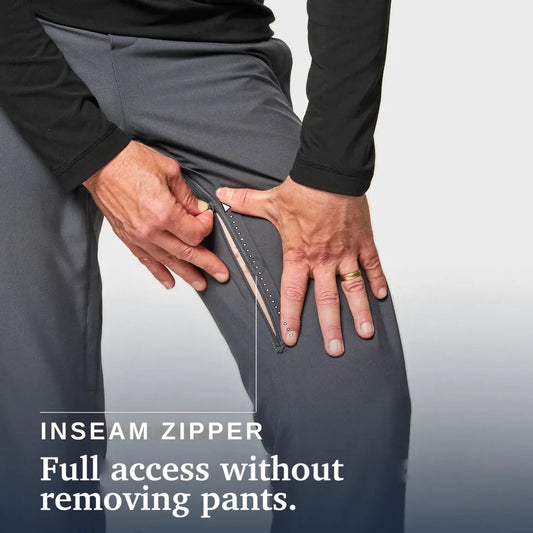
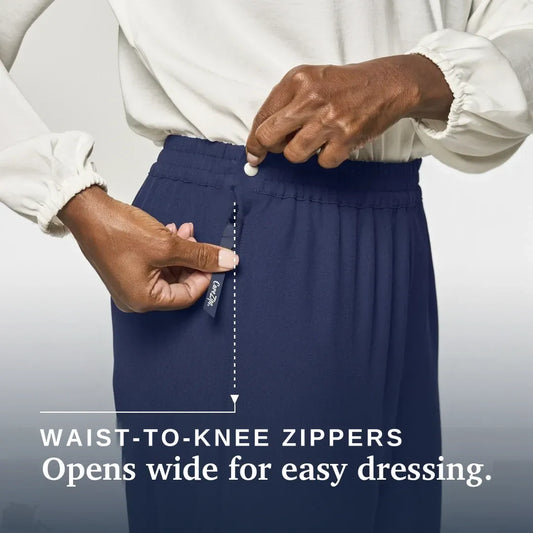
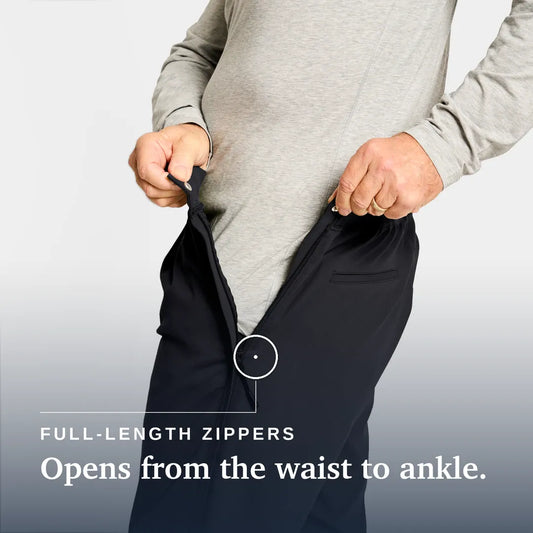
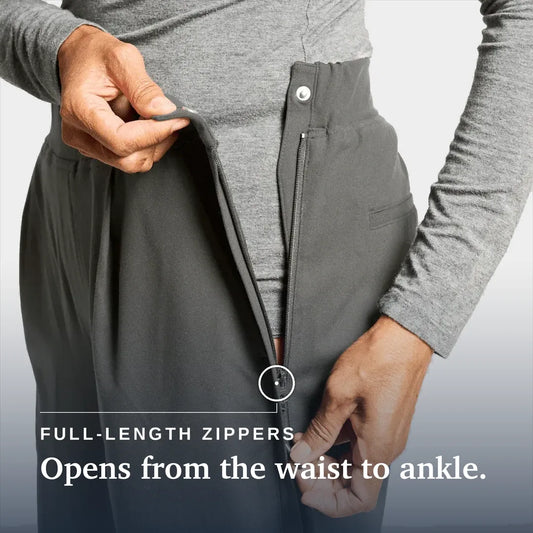
- Side-open or front-open designs that limit how far you need to bend or twist
- Extra-wide leg openings that are easier to step into while seated
- Pull-on waists that do not require zipping, buttoning, or reaching behind
- Thoughtful construction that keeps pressure off sensitive areas
These features are especially useful if you are dealing with more than one issue, such as lower back pain combined with arthritis, limited hand strength, or post-surgery restrictions. Easier fastenings and wider openings do double duty, reducing both back strain and the fine-motor effort needed to manage tiny buttons or stiff zippers.
At Joe & Bella, we focus on adaptive clothing that looks like regular, modern apparel. The goal is for your pants to feel supportive and back-friendly without signaling to the world that they are adaptive. That way, you can keep your personal style while getting the function and comfort you need.
How to Choose the Right Adaptive Pants for Your Back
Choosing adaptive pants for back pain starts with fit. You want enough room to move without drowning in fabric. When you are dealing with pain or occasional swelling, it usually helps to prioritize comfort over a tight, tailored look. Sitting down when you try pants on, or when you first put them on at home, can show you quickly if the waistband or seams will bother your back.
For many people with lower back pain, features like these make a noticeable difference:
Pull-on waistbands with discreet elastic that stay in place without feeling restrictive Flat seams that do not dig into your skin when you sit for long periods Tagless designs that reduce irritation in sensitive areas Lightweight, stretchy fabrics that offer support without stiffness
Lifestyle matters too. If you are working or out in the community most days, you may prefer adaptive pants that look like dress pants or chinos but still have an easy-on construction. If you are caregiving, using a wheelchair or walker, or recovering at home, softer, lounge-style pants with adaptive features might be more practical.
One helpful approach is to create a small capsule wardrobe made up of adaptive clothing for daily living: a few pairs of adaptive pants in different weights and colors, along with tops that are easy to put on without straining your back. This lets you get dressed quickly and comfortably for different weather, activities, and social situations.
Beyond Pants: Other Lower Back Pain Relief Products Worth Knowing About
Clothing is only one part of a complete approach to back pain care. If you are searching for the best products for lower back pain relief, it helps to think beyond the closet as well. A few categories worth exploring alongside adaptive clothing include:
Supportive seat cushions that reduce pressure on the lower back and tailbone during long periods of sitting Heating pads or cold packs to calm flare-ups and ease muscle tension Firm mattress toppers or lumbar pillows that support spinal alignment overnight Mobility aids like reachers, dressing sticks, or grab bars that reduce bending and twisting throughout the day
None of these replace medical treatment, but together with well-designed clothing, they form a more complete, practical approach to back pain care at home. Adaptive pants handle one of the most frequent, physically demanding tasks of the day, getting dressed, so it is worth treating clothing as seriously as any other lower back pain relief product on your list.
Practical Dressing Tips to Reduce Strain and Pain
Even with great adaptive pants, how you dress still matters. Small adjustments to your routine can significantly reduce strain on a painful lower back.
Try dressing while seated on a stable chair or the edge of a firm bed. This gives you better balance so you are not wobbling on one leg as you step into your pants. Work one leg at a time, pulling the pant leg over your foot and up to your knee before switching to the other leg. Once both legs are in, stand up only for the final adjustment at the waist.
Simple tools can pair nicely with adaptive clothing:
Reachers or grabbers to help pull pant legs up from the floor Long-handled shoehorns so you do not have to bend deeply for shoes Dressing sticks to hook waistbands or pull fabric into place
Stay mindful of safety. Avoid rushing, especially on mornings when your back feels stiff. Use sturdy furniture, railings, or grab bars for support when standing to pull your pants up. Choose non-slip footwear so you are less likely to slide on smooth floors while dressing.
Most importantly, listen to your pain signals. If a certain movement or style consistently makes your symptoms worse, that is useful information, not a failure on your part. Adjust your routine, try different adaptive pants, and give your body the support it is asking for. Small clothing choices can make everyday dressing with lower back pain more manageable, less painful, and more confident.
Discover Comfortable Solutions That Make Daily Dressing Easier
If you or someone you love is ready for clothing that supports comfort, safety, and independence, we invite you to explore our thoughtfully designed adaptive clothing for daily living. And in case you do end up having surgery for a back injury, you can review our guide to the best clothing to wear after back surgery. At Joe & Bella, we focus on details like easy closures, soft fabrics, and practical styles that simplify every part of your back pain care routine. If you have questions or need personal guidance choosing the right options, please contact us. Together, we can find pieces that help make getting dressed feel more dignified and stress-free.
A note from Joe & Bella: Our content is intended for general informational purposes only. While we share insights from our own Nurse Taylor and other health and wellness experts, please know that they are not your healthcare provider and nothing here should be taken as medical advice, diagnosis, or treatment. Every person's situation is different. Please consult your own physician, nurse, or healthcare professional before making any decisions about your health or the care of a loved one.
About the Author
Ben Graham is the VP of Marketing at Joe & Bella. He leads content creation and partnerships, bringing together caregiving, aging experts and adaptive-clothing experts so Joe & Bella customers are fully equipped with knowledge to help them on their aging and caregiving journeys. With deep experience in research and writing, Ben ensures that all content is accurate and backed by research.
-
CareZips® Men's Access PantsRegular price $78Regular priceUnit price per
$108Sale price $78Sale -
CareZips® Women's Access PantsRegular price $78Regular priceUnit price per
$108Sale price $78Sale -
Everyday Side-Zip Pants for MenRegular price $78Regular priceUnit price per
$108Sale price $78Sale -
Everyday Side-Zip Pant for WomenRegular price $78Regular priceUnit price per
$108Sale price $78Sale