


-
 8% OffRegular price $108Regular priceUnit price per
$118Sale price $1088% Off -
 8% OffRegular price $108Regular priceUnit price per
$118Sale price $1088% Off -
 19% OffRegular price $88Regular priceUnit price per
$108Sale price $8819% Off -
 19% OffRegular price $88Regular priceUnit price per
$108Sale price $8819% Off -
 19% OffRegular price $88Regular priceUnit price per
$108Sale price $8819% Off -
 9% OffRegular price $98Regular priceUnit price per
$108Sale price $989% Off -
 9% OffRegular price $98Regular priceUnit price per
$108Sale price $989% Off -
 10% OffRegular price $88Regular priceUnit price per
$98Sale price $8810% Off -
 10% OffRegular price $88Regular priceUnit price per
$98Sale price $8810% Off -
 10% OffRegular price $88Regular priceUnit price per
$98Sale price $8810% Off -
 10% OffRegular price $88Regular priceUnit price per
$98Sale price $8810% Off -
 10% OffRegular price $88Regular priceUnit price per
$98Sale price $8810% Off -
 10% OffRegular price $88Regular priceUnit price per
$98Sale price $8810% Off -
 9% OffRegular price $98Regular priceUnit price per
$108Sale price $989% Off -
 9% OffRegular price $98Regular priceUnit price per
$108Sale price $989% Off -
 9% OffRegular price $98Regular priceUnit price per
$108Sale price $989% Off -
 19% OffRegular price $88Regular priceUnit price per
$108Sale price $8819% Off -
 19% OffRegular price $88Regular priceUnit price per
$108Sale price $8819% Off -
 19% OffRegular price $88Regular priceUnit price per
$108Sale price $8819% Off -
 9% OffRegular price $98Regular priceUnit price per
$108Sale price $989% Off -
 19% OffRegular price $88Regular priceUnit price per
$108Sale price $8819% Off -
 10% OffRegular price $88Regular priceUnit price per
$98Sale price $8810% Off -
 10% OffRegular price $88Regular priceUnit price per
$98Sale price $8810% Off -
 10% OffRegular price $88Regular priceUnit price per
$98Sale price $8810% Off -
 10% OffRegular price $88Regular priceUnit price per
$98Sale price $8810% Off -
 10% OffRegular price $88Regular priceUnit price per
$98Sale price $8810% Off -
 10% OffRegular price $88Regular priceUnit price per
$98Sale price $8810% Off -
 10% OffRegular price $88Regular priceUnit price per
$98Sale price $8810% Off -
 10% OffRegular price $88Regular priceUnit price per
$98Sale price $8810% Off -
 10% OffRegular price $88Regular priceUnit price per
$98Sale price $8810% Off -
 10% OffRegular price $88Regular priceUnit price per
$98Sale price $8810% Off -
 19% OffRegular price $88Regular priceUnit price per
$108Sale price $8819% Off -
 9% OffRegular price $98Regular priceUnit price per
$108Sale price $989% Off -
 9% OffRegular price $98Regular priceUnit price per
$108Sale price $989% Off -
 10% OffRegular price $88Regular priceUnit price per
$98Sale price $8810% Off -
 10% OffRegular price $88Regular priceUnit price per
$98Sale price $8810% Off -
 10% OffRegular price $88Regular priceUnit price per
$98Sale price $8810% Off -
 10% OffRegular price $88Regular priceUnit price per
$98Sale price $8810% Off -
 10% OffRegular price $88Regular priceUnit price per
$98Sale price $8810% Off -
 10% OffRegular price $88Regular priceUnit price per
$98Sale price $8810% Off -
 10% OffRegular price $88Regular priceUnit price per
$98Sale price $8810% Off -
 10% OffRegular price $88Regular priceUnit price per
$98Sale price $8810% Off -
 10% OffRegular price $88Regular priceUnit price per
$98Sale price $8810% Off -
 10% OffRegular price $88Regular priceUnit price per
$98Sale price $8810% Off -
 10% OffRegular price $88Regular priceUnit price per
$98Sale price $8810% Off -
 9% OffRegular price $98Regular priceUnit price per
$108Sale price $989% Off -
 9% OffRegular price $98Regular priceUnit price per
$108Sale price $989% Off -
 Regular price $108Regular priceUnit price per
$108Sale price $1080% Off -
 Regular price $54Regular priceUnit price per
$54Sale price $540% Off -
 Regular price $54Regular priceUnit price per
$54Sale price $540% Off -
 Regular price $54Regular priceUnit price per
$54Sale price $540% Off -
 Regular price $54Regular priceUnit price per
$54Sale price $540% Off -
 Regular price $54Regular priceUnit price per
$54Sale price $540% Off -
 33% OffRegular price $36Regular priceUnit price per
$54Sale price $3633% Off -
 33% OffRegular price $36Regular priceUnit price per
$54Sale price $3633% Off -
 8% OffRegular price $108Regular priceUnit price per
$118Sale price $1088% Off -
 8% OffRegular price $108Regular priceUnit price per
$118Sale price $1088% Off -
 19% OffRegular price $44Regular priceUnit price per
$54Sale price $4419% Off -
 19% OffRegular price $44Regular priceUnit price per
$54Sale price $4419% Off -
 19% OffRegular price $44Regular priceUnit price per
$54Sale price $4419% Off -
 19% OffRegular price $44Regular priceUnit price per
$54Sale price $4419% Off -
 9% OffRegular price $98Regular priceUnit price per
$108Sale price $989% Off -
 9% OffRegular price $98Regular priceUnit price per
$108Sale price $989% Off -
 Regular price $108Regular priceUnit price per
$108Sale price $1080% Off -
 Regular price $118Regular priceUnit price per
$118Sale price $118 -
 Regular price $118Regular priceUnit price per
$118Sale price $118


-
-
-
-
CareZips® Men's Access Pants
Regular price $98Regular priceUnit price per$108Sale price $989% Off -
-
Magnetic Button-Down | Tailored-Fit
Regular price $88Regular priceUnit price per$98Sale price $8810% Off -
Magnetic Button-Down | Relaxed-Fit
Regular price $88Regular priceUnit price per$98Sale price $8810% Off -
CareZips® Women's Access Pants
Regular price $88Regular priceUnit price per$108Sale price $8819% Off -
Short-Sleeve Magnetic-Button Shirt
Regular price $88Regular priceUnit price per$98Sale price $8810% Off -
-
HoodEase®: The Magnetic Zip-Up Hoodie
Regular price $98Regular priceUnit price per$108Sale price $989% Off -
-
-
HoodEase®: The Magnetic Zip-Up Hoodie
Regular price $98Regular priceUnit price per$108Sale price $989% Off -
Magnetic Zip-Up Sweater For Men
Regular price $118Regular priceUnit price per$118Sale price $118


Living with limb loss can change the way you get dressed, whether you use a prosthetic limb, primarily dress with one hand, or simply need clothing that is easier to put on and take off.
Joe & Bella offers adaptive clothing for amputees with features such as magnetic closures, side-opening pants, wider leg openings, four-way stretch and seated-friendly construction. These details are designed to make everyday dressing easier while maintaining the look and feel of familiar clothing.
The most useful adaptive features depend on whether limb loss affects an arm or leg, whether you use a prosthesis and which part of getting dressed presents the biggest challenge.
What Is Adaptive Clothing for Amputees?
Adaptive clothing for amputees is everyday apparel designed to simplify dressing when conventional clothing is difficult to manage.
Depending on the garment, adaptive features may include:
- Magnetic or easier-to-manage closures
- Side-opening pants
- Wider leg openings
- Four-way stretch
- Minimal seams
- Soft, breathable fabrics
- Moisture-wicking materials
- Seated-friendly construction
Not every person with limb loss needs the same features. Clothing for an upper-limb amputee may solve a very different dressing challenge from pants designed for someone who uses a lower-limb prosthesis.
Adaptive Pants for Lower-Limb Amputees
For many people with lower-limb loss, pants can be one of the most difficult parts of getting dressed.
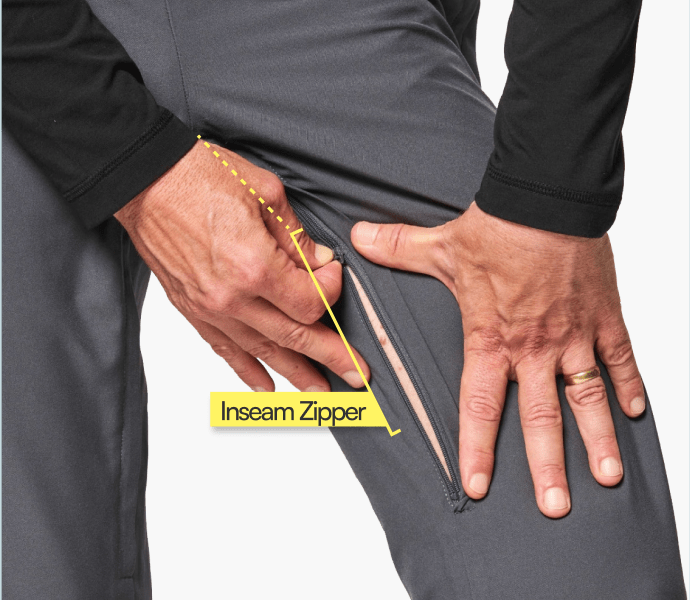
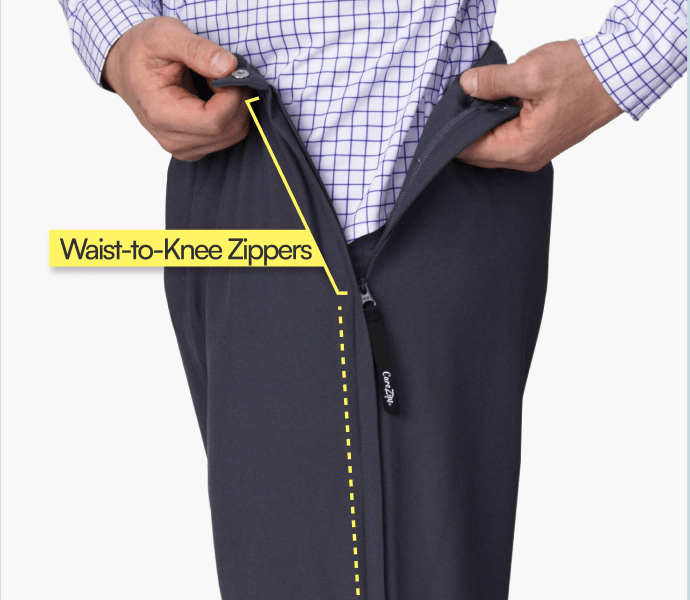
Traditional pant legs may be difficult to pull over or around a prosthetic leg. Adaptive pants with side openings and wider leg openings can provide easier access and reduce the amount of pulling, balancing or repositioning required while dressing.
Helpful features can include:
- Side zippers for easier access
- Wider leg openings to accommodate a prosthesis
- Four-way stretch
- Stretch fabrics that help reduce friction
- Seated-friendly construction
- Flexible waist designs
If your primary need is easier access around a lower-limb prosthesis, explore our Adaptive Pants for Prosthetic Legs.
You can also browse our broader Adaptive Pants collection for additional easy-dressing designs.
Adaptive Shirts for Upper-Limb Amputees
Upper-limb loss can create a different dressing challenge: fastening buttons, operating closures or managing a shirt primarily with one hand.
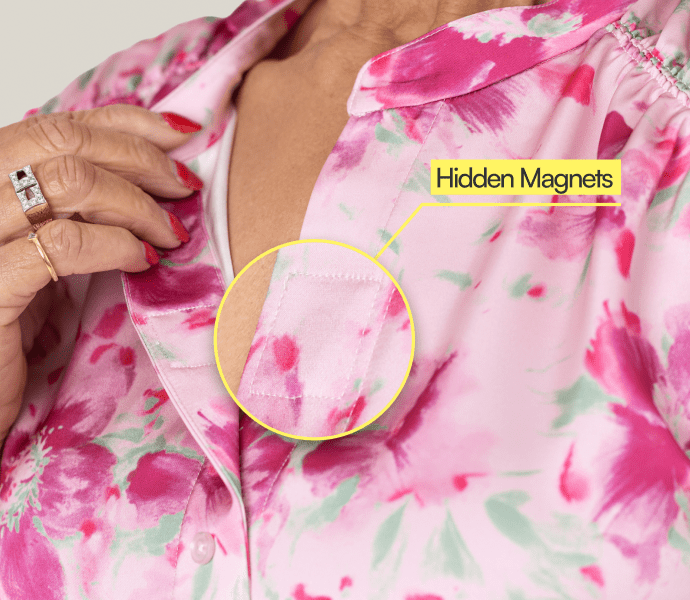
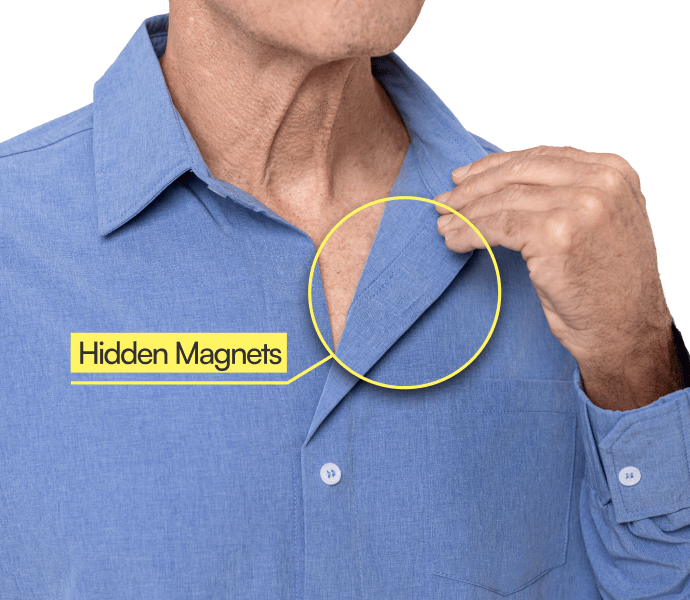
Magnetic button shirts can reduce the fine-motor coordination required to fasten a traditional button-down shirt while maintaining the appearance of conventional clothing.
They may be especially useful for:
- One-handed dressing
- Reducing the need to manipulate small buttons
- Making front-opening shirts easier to fasten
- Simplifying independent or assisted dressing
Browse Men’s Adaptive Shirts and Women’s Adaptive Shirts for additional easy-dressing options.
Important: Magnetic closures may not be appropriate for people with certain implanted medical devices. Follow the product warning and guidance from your device manufacturer or healthcare provider.
Clothing to Wear With a Prosthetic Leg
The best clothing for a prosthetic leg depends on the prosthesis itself and the way you prefer to get dressed.
Consider:
- Whether you need easier access to the prosthesis
- Whether you dress standing or seated
- How much of the pant leg needs to open
- Whether pulling a traditional pant leg over the prosthesis is difficult
- Whether friction between the prosthesis and clothing is a concern
- Which waistband and closure styles are easiest for you to manage
Rather than choosing clothing simply because it is labeled “prosthetic-friendly,” focus on the specific part of dressing that is difficult for you.
Designed for Prosthetic Comfort
Clothing worn with a prosthesis needs to work with the way you move and dress throughout the day.
Helpful features may include:
- Soft, breathable fabrics
- Moisture-wicking materials
- Stretch fabrics that help reduce friction
- Minimal seams
- Wider leg openings for prosthetic access
- Four-way stretch
- Seated-friendly construction
These features can make clothing easier to manage around a prosthesis while supporting more comfortable everyday wear.
Adaptive Clothing for One-Handed Dressing
One-handed dressing is not limited to one particular type of limb difference.
If traditional buttons are difficult to fasten, a magnetic closure may be the most useful feature.
If putting pants on is the challenge, the way the garment opens may matter more.
If you use a prosthesis, access and leg-opening width may be the priority.
Choosing clothing around the particular dressing task can be more helpful than looking for one universal type of “amputee clothing.”
Adaptive Clothing vs. Prosthetic Equipment
Adaptive clothing and prosthetic equipment serve different purposes.
Adaptive clothing can simplify dressing, provide easier access and help clothing work more comfortably around a prosthesis. It does not change the fit of a prosthesis or treat skin irritation, pressure or other prosthesis-related concerns.
If you experience new discomfort, skin changes or problems with prosthetic fit, consult your prosthetist or healthcare team rather than relying on clothing changes alone.
What to Look for in Adaptive Clothing for Amputees
The best place to start is your everyday dressing routine.
For lower-limb loss, consider whether wider leg openings or side-opening pants would make dressing and prosthetic access easier.
For upper-limb loss, consider which closures you can comfortably operate and whether magnetic or other easy-dressing designs simplify the process.
Other useful features may include:
- Prosthetic access through wider leg openings or side zippers
- Stretch fabrics that help reduce friction
- Minimal seams
- Soft, breathable fabrics
- Moisture-wicking materials
- Four-way stretch
- Seated-friendly construction
- Easy closures for one-handed dressing
The right combination depends on your body, prosthesis, mobility and dressing routine.
Nurse Taylor’s Tip
"Before shopping for “amputee clothing,” identify the specific step in getting dressed that gives you the most trouble.
For a lower-limb prosthesis, that may mean getting a pant leg over the prosthesis, reducing friction or accessing the prosthesis once dressed. Wider openings or side-opening pants may help.
For upper-limb loss, the biggest challenge may be fastening buttons or managing clothing with one hand. In that case, an easier closure may matter more than the fabric or fit.
Choose the adaptive feature around the actual dressing challenge rather than assuming every adaptive garment will solve the same problem.
If you experience new discomfort, skin changes or issues with prosthetic fit, check with your prosthetist or care team."
— Nurse Taylor
Adaptive Clothing That Looks Like Everyday Clothing
Adaptive clothing does not have to look medical.
Joe & Bella combines easy-dressing features with modern, everyday styles designed for home, work and daily life.
Explore adaptive pants, shirts and other apparel to find the features that work best with your body, mobility and dressing routine.