


-
 28% OffRegular price $78Regular priceUnit price per
$108Sale price $7828% Off -
 19% OffRegular price $88Regular priceUnit price per
$108Sale price $8819% Off -
 19% OffRegular price $88Regular priceUnit price per
$108Sale price $8819% Off -
 9% OffRegular price $98Regular priceUnit price per
$108Sale price $989% Off -
 20% OffRegular price $78Regular priceUnit price per
$98Sale price $7820% Off -
 20% OffRegular price $78Regular priceUnit price per
$98Sale price $7820% Off -
 20% OffRegular price $78Regular priceUnit price per
$98Sale price $7820% Off -
 20% OffRegular price $78Regular priceUnit price per
$98Sale price $7820% Off -
 28% OffRegular price $78Regular priceUnit price per
$108Sale price $7828% Off -
 20% OffRegular price $86Regular priceUnit price per
$108Sale price $8620% Off -
 20% OffRegular price $86Regular priceUnit price per
$108Sale price $8620% Off -
 28% OffRegular price $78Regular priceUnit price per
$108Sale price $7828% Off -
 19% OffRegular price $88Regular priceUnit price per
$108Sale price $8819% Off -
 19% OffRegular price $88Regular priceUnit price per
$108Sale price $8819% Off -
 9% OffRegular price $98Regular priceUnit price per
$108Sale price $989% Off -
 8% OffRegular price $108Regular priceUnit price per
$118Sale price $1088% Off -
 8% OffRegular price $108Regular priceUnit price per
$118Sale price $1088% Off -
 10% OffRegular price $88Regular priceUnit price per
$98Sale price $8810% Off -
 10% OffRegular price $88Regular priceUnit price per
$98Sale price $8810% Off -
 10% OffRegular price $88Regular priceUnit price per
$98Sale price $8810% Off -
 10% OffRegular price $88Regular priceUnit price per
$98Sale price $8810% Off -
 10% OffRegular price $88Regular priceUnit price per
$98Sale price $8810% Off -
 31% OffRegular price $74Regular priceUnit price per
$108Sale price $7431% Off -
 20% OffRegular price $86Regular priceUnit price per
$108Sale price $8620% Off -
 20% OffRegular price $86Regular priceUnit price per
$108Sale price $8620% Off -
 10% OffRegular price $88Regular priceUnit price per
$98Sale price $8810% Off -
 10% OffRegular price $88Regular priceUnit price per
$98Sale price $8810% Off -
 10% OffRegular price $88Regular priceUnit price per
$98Sale price $8810% Off -
 10% OffRegular price $88Regular priceUnit price per
$98Sale price $8810% Off -
 10% OffRegular price $88Regular priceUnit price per
$98Sale price $8810% Off -
 Regular price $54Regular priceUnit price per
$54Sale price $540% Off -
 11% OffRegular price $48Regular priceUnit price per
$54Sale price $4811% Off -
 11% OffRegular price $48Regular priceUnit price per
$54Sale price $4811% Off -
 Regular price $54Regular priceUnit price per
$54Sale price $540% Off -
 Regular price $54Regular priceUnit price per
$54Sale price $540% Off -
 30% OffRegular price $38Regular priceUnit price per
$54Sale price $3830% Off -
 30% OffRegular price $38Regular priceUnit price per
$54Sale price $3830% Off -
 9% OffRegular price $98Regular priceUnit price per
$108Sale price $989% Off -
 9% OffRegular price $98Regular priceUnit price per
$108Sale price $989% Off -
 Regular price $108Regular priceUnit price per
$108Sale price $1080% Off -
 9% OffRegular price $98Regular priceUnit price per
$108Sale price $989% Off -
 9% OffRegular price $98Regular priceUnit price per
$108Sale price $989% Off -
 Regular price $108Regular priceUnit price per
$108Sale price $1080% Off -
 11% OffRegular price $48Regular priceUnit price per
$54Sale price $4811% Off -
 11% OffRegular price $48Regular priceUnit price per
$54Sale price $4811% Off -
 11% OffRegular price $48Regular priceUnit price per
$54Sale price $4811% Off -
 11% OffRegular price $48Regular priceUnit price per
$54Sale price $4811% Off -
 17% OffRegular price $98Regular priceUnit price per
$118Sale price $9817% Off -
 17% OffRegular price $98Regular priceUnit price per
$118Sale price $9817% Off -
 10% OffRegular price $88Regular priceUnit price per
$98Sale price $8810% Off -
 10% OffRegular price $88Regular priceUnit price per
$98Sale price $8810% Off -
 10% OffRegular price $88Regular priceUnit price per
$98Sale price $8810% Off -
 10% OffRegular price $88Regular priceUnit price per
$98Sale price $8810% Off -
 10% OffRegular price $88Regular priceUnit price per
$98Sale price $8810% Off -
 20% OffRegular price $78Regular priceUnit price per
$98Sale price $7820% Off -
 20% OffRegular price $78Regular priceUnit price per
$98Sale price $7820% Off -
 20% OffRegular price $78Regular priceUnit price per
$98Sale price $7820% Off -
 20% OffRegular price $78Regular priceUnit price per
$98Sale price $7820% Off -
 Regular price $118Regular priceUnit price per
$118Sale price $118 -
 Regular price $118Regular priceUnit price per
$118Sale price $118


-
-
-
CareZips® Men's Access Pants
Regular price $78Regular priceUnit price per$108Sale price $7828% Off -
-
-
Magnetic Button-Down | Tailored-Fit
Regular price $88Regular priceUnit price per$98Sale price $8810% Off -
CareZips® Women's Access Pants
Regular price $74Regular priceUnit price per$108Sale price $7431% Off -
Magnetic Button-Down | Relaxed-Fit
Regular price $88Regular priceUnit price per$98Sale price $8810% Off -
HoodEase®: The Magnetic Zip-Up Hoodie
Regular price $98Regular priceUnit price per$108Sale price $989% Off -
HoodEase®: The Magnetic Zip-Up Hoodie
Regular price $98Regular priceUnit price per$108Sale price $989% Off -
-
-
Short-Sleeve Magnetic-Button Shirt
Regular price $88Regular priceUnit price per$98Sale price $8810% Off -
-
Magnetic Zip-Up Sweater For Men
Regular price $118Regular priceUnit price per$118Sale price $118


Getting dressed after surgery can be difficult when bending, reaching, lifting an arm or managing traditional fasteners is temporarily uncomfortable or restricted.
Joe & Bella’s post-surgery clothing is designed to make everyday dressing easier with features such as magnetic closures, accessible pant openings, four-way stretch fabrics, minimal seams and ergonomic construction.
Whether you’re dressing independently or with help from someone else, the best recovery clothing is the clothing that addresses the movements that are currently most difficult.
Recovering from a fracture, cast or other injury rather than surgery? Explore our Injury & Recovery Clothing.
Wondering whether your purchase may qualify for HSA/FSA reimbursement? Read our guide to HSA/FSA dollars for post-surgery clothing.
What Is Post-Surgery Clothing?
Post-surgery clothing is everyday apparel designed to be easier to put on, take off or manage when movement is temporarily limited during recovery.
Instead of changing how clothing looks, adaptive recovery wear modifies common dressing features such as buttons, waistbands and pant openings.
Depending on the garment, helpful features may include:
- Magnetic or simplified closures
- Front-opening shirts
- Accessible pant openings
- Flexible waistbands
- Four-way stretch fabrics
- Minimal seams
- Ergonomic construction
Different surgeries can create very different dressing challenges, so there is no single type of clothing that works for every recovery.
What to Look for in Post-Surgery Clothing
The best clothing after surgery should match both your current mobility and the instructions provided by your care team.
Easy Dressing With Less Complicated Closures
Buttons, zippers and other small fasteners can become difficult when hand strength, dexterity, shoulder movement or energy is temporarily limited.
Look for garments that reduce the number of small movements required to get dressed.
Accessible Openings
Clothing that opens farther can make it easier to get an arm, leg or foot into the garment without forcing the body through the same movements required by conventional clothing.
This can be especially useful when dressing while seated or receiving assistance.
Flexible Construction
Four-way stretch can provide more room for comfortable movement and make garments easier to position while dressing.
Minimal Seams
Simpler construction can help garments feel less complicated against the body during everyday wear.
Appropriate Fit
Recovery needs can change from person to person. Follow your medical team's instructions if you need to accommodate dressings, braces, drains or other post-operative equipment.
Avoid assuming that tighter or looser clothing is always better—the right fit depends on your procedure and recovery plan.
Easy-Care Clothing
Recovery clothing may be worn frequently, so practical washing and care instructions can matter just as much as dressing features.
Familiar Style
Post-surgery clothing does not have to look medical.
Choosing garments that resemble the clothing someone already wears can make recovery dressing feel more normal and allows many pieces to remain useful after recovery.
Choose Recovery Clothing by Dressing Challenge
Rather than shopping only by the name of the surgery, start with the movement that has become difficult.
When Reaching or Buttoning Is Difficult
Traditional shirts can require considerable shoulder movement and fine hand dexterity.
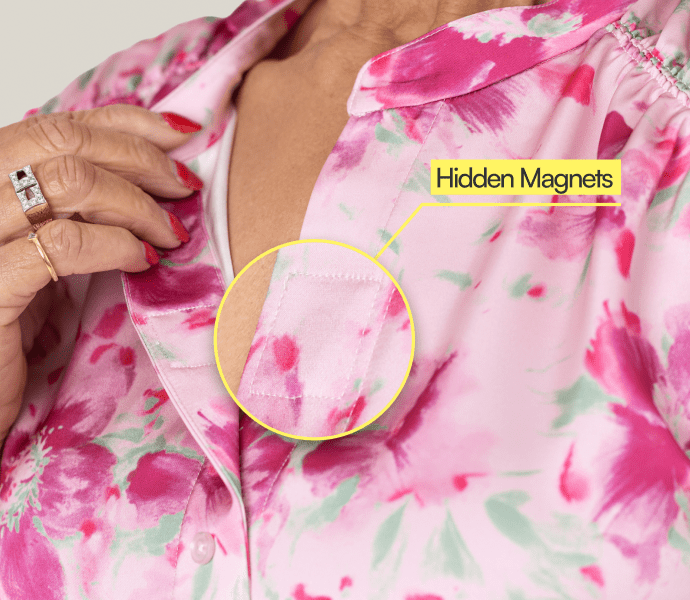
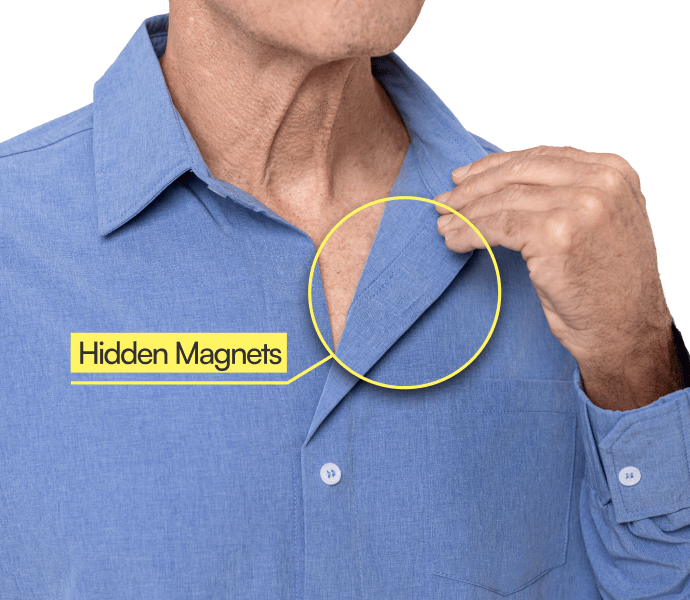
Magnetic clothing uses hidden magnetic closures to create the appearance of a traditional button-down without requiring each button to be manually fastened.
Front-opening clothing can also provide an alternative to pulling a garment over the head.
People with pacemakers or other implanted medical devices should follow guidance from their device and garment manufacturers before wearing magnetic clothing.
When Bending or Stepping Into Pants Is Difficult
Lower-body dressing can become challenging when bending, lifting a leg or pulling pants over the hips is uncomfortable or restricted.
Side-Zip Pants open more fully than traditional pants, providing additional room for dressing and making them useful for people who prefer or need to get dressed while seated.
Flexible-waist designs can also reduce the number of fasteners that need to be managed.
Explore:
When More Access Is Needed
Some recovery routines involve caregiver assistance, toileting or other situations where greater access is helpful.
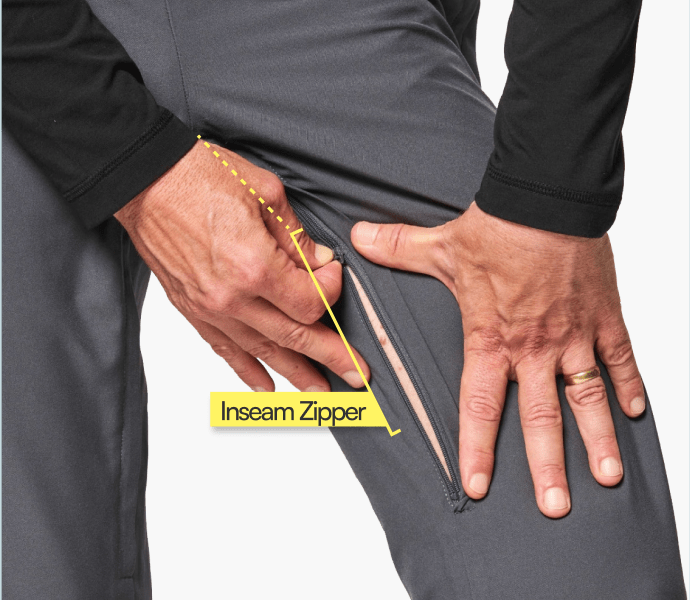
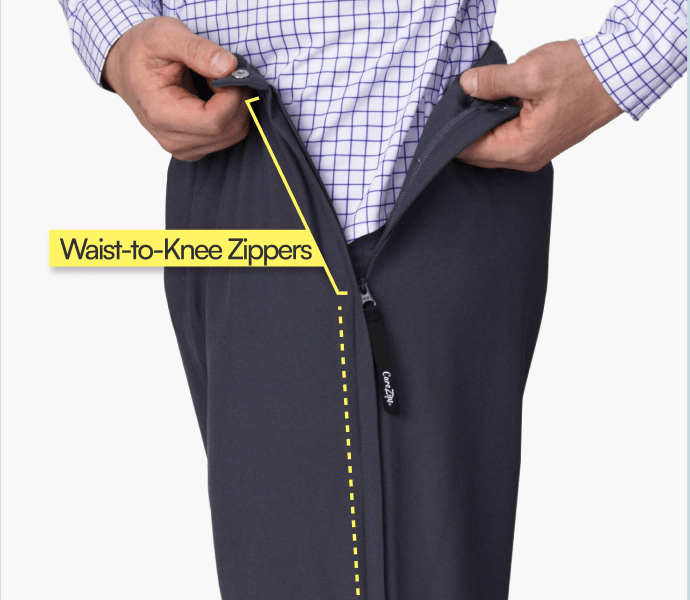
CareZips® Access Pants use a patented three-zipper design with two outer waist-to-knee zippers and an inseam zipper running from knee to knee through the crotch.
This allows the pants to open more extensively while remaining on the wearer.
Clothing for Different Types of Surgery
Specific procedures can create different dressing limitations. Use these examples as a starting point, while following the movement restrictions and clothing guidance provided by your healthcare team.
Shoulder or Rotator Cuff Surgery
If reaching, raising an arm or manipulating buttons is difficult, front-opening garments and simplified closures may make dressing easier.
Explore our clothing for shoulder surgery recovery or read our guide to what to wear after shoulder or rotator cuff surgery.
Abdominal Surgery
After abdominal surgery, many people look for flexible clothing that is easier to manage around the midsection.
The appropriate waistband and fit depend on the location of your incision and the instructions provided by your surgical team.
Read our guide to what to wear after abdominal surgery.
Heart or Chest Surgery
Front-opening clothing can provide an alternative to garments that need to be pulled over the head.
Because restrictions vary by procedure, follow your care team's guidance about reaching, lifting and clothing near the surgical area.
Back or Spine Surgery
If bending or twisting is temporarily difficult, clothing with easier closures, flexible waistbands or accessible pant openings may reduce some of the movements involved in dressing.
Read our guide to the best clothes to wear after back surgery.
Hip or Knee Surgery
Side-opening pants and flexible waistbands may be helpful when bending, lifting a leg or stepping into conventional pants is difficult.
Your care team can advise you about clothing around dressings, braces or other post-operative equipment.
Comfortable Clothes for After Surgery
Many people searching for post-surgery clothing are simply looking for everyday clothes that are easier to manage during recovery.
Useful qualities may include:
- Easy-to-manage closures
- Flexible fabrics
- Accessible openings
- Comfortable movement
- Clothing that can be put on while seated
- Familiar styles that can continue to be worn after recovery
The goal is not necessarily to build a temporary recovery wardrobe. Often, a few thoughtfully chosen garments can solve the specific dressing problems created by surgery.
What to Wear Home From the Hospital
Discharge day is another time when easier clothing can help.
Depending on your procedure and mobility, consider clothing that is:
- Simple to put on with your current movement restrictions
- Easy to manage while seated
- Flexible enough for comfortable travel
- Compatible with any dressing, brace or equipment your care team has instructed you to use
A front-opening shirt, flexible-waist pants or pants with accessible openings may be easier to manage than more restrictive clothing.
Follow your surgical team's instructions for anything that may contact an incision or medical equipment.
Recovery Socks
Gripper Socks
Gripper socks provide additional traction on smooth indoor flooring.
They may be useful at home, in rehabilitation or in other indoor environments during recovery, but they should not be treated as a substitute for mobility assistance or other precautions recommended by a care team.
Compression Socks
Some people are instructed to wear compression socks after surgery.
Whether compression is appropriate—and the correct compression level and duration—depends on the individual and procedure.
If your healthcare team has recommended compression, explore our compression socks and follow the instructions provided by your medical professional.
Nurse Taylor’s Tip
"Before buying post-surgery clothing, start with the movement restrictions you’ve actually been given.
If reaching overhead is difficult, look at front-opening options. If bending or stepping into pants is the challenge, consider pants that open farther. If you’re dressing with one hand, simplify the closures you need to manage.
Matching the garment to the specific movement that is difficult is usually more useful than choosing clothing based only on the name of the surgery."
— Nurse Taylor
Recovery Clothing That Still Feels Like Your Clothing
Post-surgery needs may be temporary, but your clothing should still feel familiar.
Joe & Bella designs adaptive apparel to look like everyday shirts and pants while incorporating discreet features that make dressing easier.
Four-way stretch fabrics, minimal seams and ergonomic construction are built into clothing designed to remain useful well beyond the initial recovery period.
Additional Resources
- Post Surgery Clothing: Recovery Wear Guide for Comfort
- Can you Use HSA/FSA Dollars for Post-Surgery Clothing?
- Best Clothes to Wear After Back Surgery
- Essential Clothing for Recovery After Knee Replacement
- Adaptive Clothing for Post Mastectomy
- Going Home From Hospital Outfits
- What to Wear After Abdominal Surgery
- What to Wear After Hip Surgery
- What Clothing to Wear After Open Heart Surgery?
-
The Best Clothes to Wear After Bariatric Surgery?
- What to Wear After Shoulder or Rotator Cuff Surgery?
- What Clothing Should I Wear After Pacemaker Surgery?
- Must-Have Helpful Gifts for Bedridden Adults and Seniors