Getting dressed can become surprisingly difficult when you’re living with Parkinson’s disease.
Buttons that once took seconds may require much more concentration. Pulling on pants can become harder when stiffness limits movement. Tremors may make small fasteners frustrating, while balance changes can make standing to put on socks or shoes less safe.
The right clothing cannot eliminate Parkinson’s symptoms, but it can reduce some of the physical demands involved in getting dressed.
Adaptive clothing for Parkinson’s uses features such as magnetic closures, easy-access openings, elastic or flexible waistbands, stretch fabrics and easier-to-grip fasteners to make everyday dressing more manageable.
This guide explains which clothing features may help, how Parkinson’s can affect dressing, and practical ways to make getting ready easier.
What Clothing Is Easiest for Someone With Parkinson’s?
The easiest clothing for someone with Parkinson’s generally requires less fine-motor control, less reaching and bending, and fewer complicated fastening steps.
Helpful features can include:
- Magnetic buttons or other easy closures
- Magnetic or easy-start zippers
- Elastic or flexible waistbands
- Side-opening pants
- Larger zipper pulls
- Stretch fabrics
- Wider neck, sleeve and pant openings
- Non-slip socks
- Supportive shoes with simple closures
- Clothing that can be put on while seated
There is no single best type of clothing for everyone with Parkinson’s.
The right choice depends on which symptoms make dressing difficult. Someone primarily experiencing hand tremors may need different features than someone whose biggest challenges are rigidity, slow movement or balance.
Why Can Parkinson’s Make Getting Dressed Difficult?
Parkinson’s can affect movement in several different ways, and those changes can turn dressing into a more complicated activity.
Tremor and Reduced Hand Control
Small buttons, zipper pulls, shoelaces and clasps require precise movements.
Tremor or changes in fine motor control can make these fasteners harder to manipulate, particularly when they require both hands to work together.
Bradykinesia
Bradykinesia means slowness of movement and is a common feature of Parkinson’s.
Tasks that involve several movements in sequence—putting an arm through a sleeve, pulling a shirt into place and fastening it, for example—may take longer than they once did.
Clothing with fewer steps can help simplify the process.
Rigidity and Stiffness
Stiffness in the arms, shoulders, hips or legs can make it harder to reach into sleeves, lift the legs into pants or bend toward the feet.
Garments with wider openings, stretch and easier access can reduce how much range of motion dressing requires.
Balance Changes
Standing on one leg while stepping into pants or trying to put on socks can become more difficult when balance is affected.
The Parkinson’s Foundation recommends sitting in a sturdy chair while dressing when possible rather than balancing on the edge of a bed.
Fatigue
Dressing can require more time and energy when movements are slower or more physically demanding.
Simplifying closures and choosing clothing that requires fewer steps may help conserve energy for the rest of the day.
Best Shirts for People With Parkinson’s

Traditional button-down shirts can be particularly frustrating because each button requires pinching, alignment and fine finger movement.
Magnetic Button Shirts
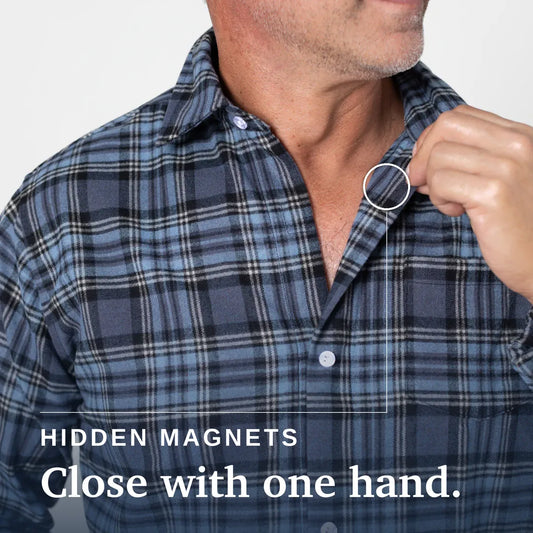
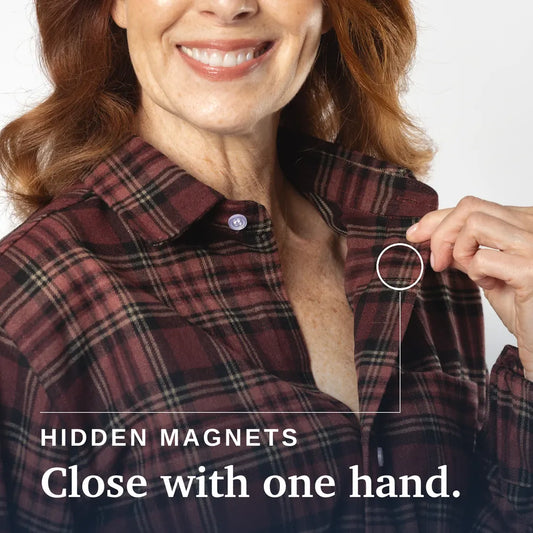
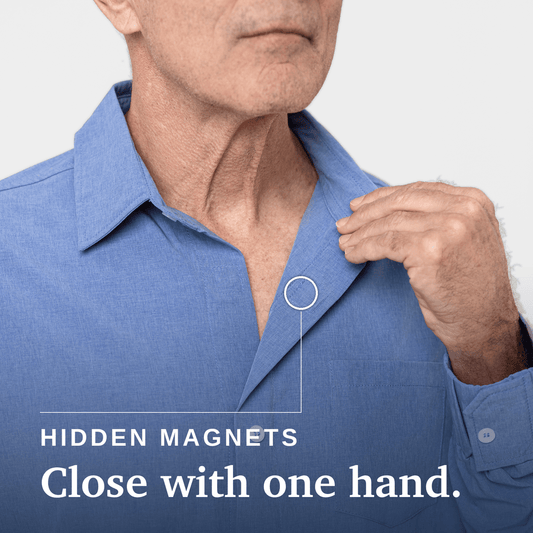
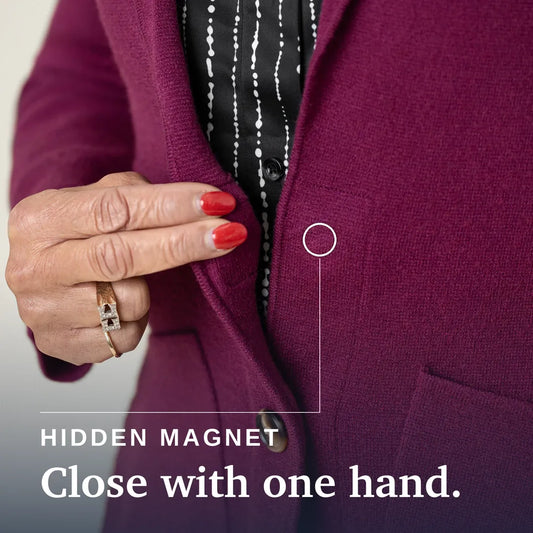
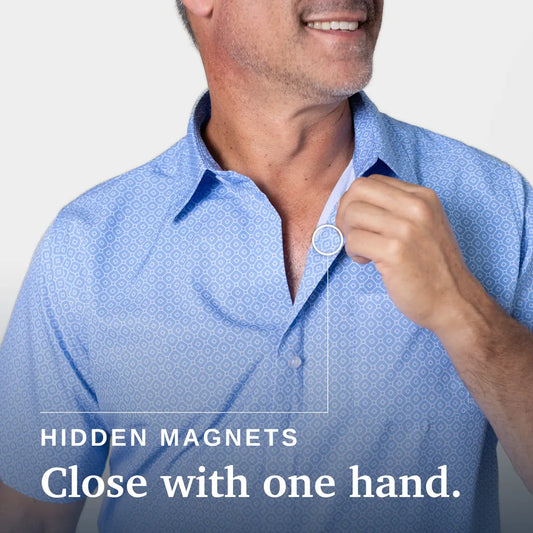
Magnetic button shirts preserve the appearance of a traditional button-down but replace the functional buttons with hidden magnets.
Instead of pushing each button through a buttonhole, the two sides of the shirt are brought together and the magnets connect.
This can reduce the precise finger movements required by traditional buttons.
Magnetic shirts may be particularly useful for someone who:
- Has difficulty manipulating small buttons
- Experiences hand tremors
- Has reduced finger dexterity
- Uses primarily one hand for dressing
- Wants to continue wearing traditional-looking button-down shirts
For people who enjoy the appearance of classic shirts, this can be a useful way to simplify dressing without dramatically changing personal style.
Look for Easy Cuffs

Shirt cuffs can be just as difficult as the buttons down the front of a shirt.
Traditional barrel cuffs may require one hand to manipulate a small button on the opposite wrist.
Look for:
- Stretch cuffs
- Magnetic cuffs
- Wider sleeve openings
- Cuffs that do not need to be unfastened
- Soft fabrics with some flexibility
Small changes at the cuff can remove another frustrating dressing step.
Choose Tops That Are Easy to Put On
Not every top needs an adaptive closure.
For T-shirts, sweaters and other pull-on tops, look for:
- Stretchy neck openings
- Room through the shoulders
- Soft, flexible fabrics
- Sleeves that are not excessively tight
- Enough stretch to accommodate stiffness
Very tight shirts may require more pulling and reaching than looser garments.
That does not necessarily mean sizing up. A garment with the right amount of stretch and a well-designed opening may work better than an oversized shirt with excess fabric.
Best Pants for People With Parkinson’s

Pants can create several challenges at once: stepping into the legs, pulling the pants upward, maintaining balance and fastening the waistband.
Elastic or Flexible Waistbands
Elastic-waist pants eliminate buttons, hooks or belts that may require fine motor control.
The Parkinson’s Foundation specifically recommends elastic-waist pants as one option that can simplify dressing.
Look for waistbands that are flexible without being excessively tight.
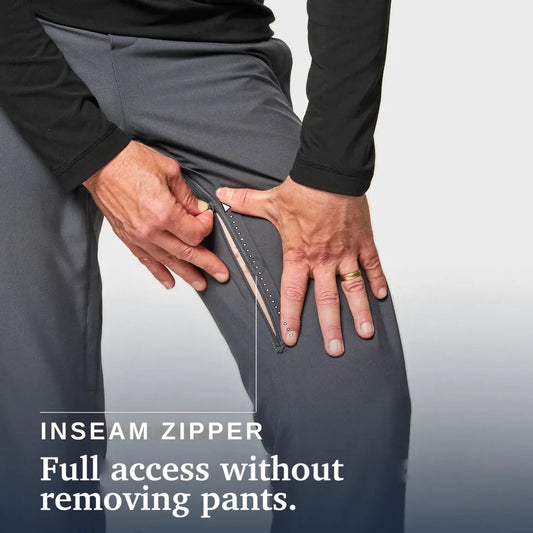
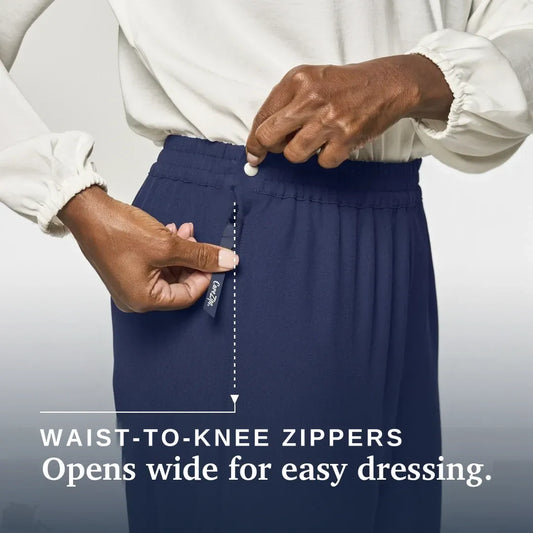
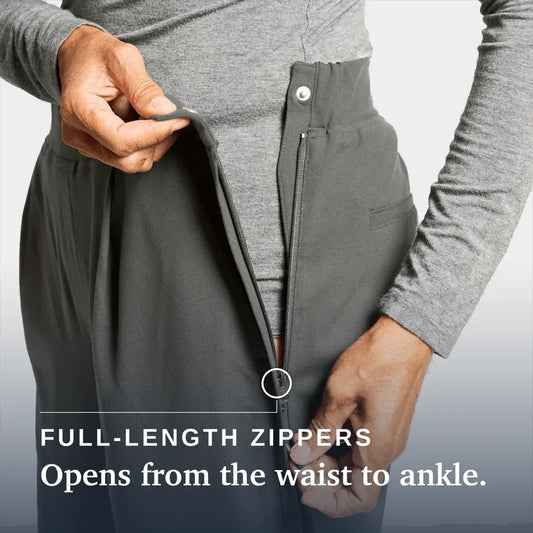
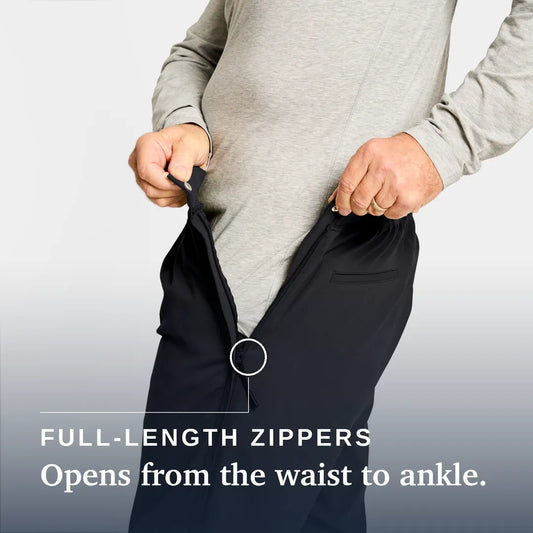
Side-Zip Pants
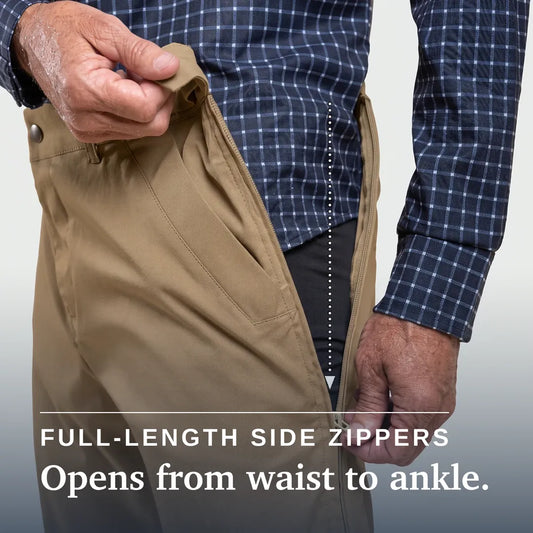
Side-opening pants can make the leg opening substantially wider.
Instead of pushing the foot through a narrow pant leg and pulling the fabric upward, opening the sides can reduce the amount of bending, leg lifting and fabric pulling required.
This can be helpful for someone who dresses while seated or experiences stiffness in the hips or legs.
Larger Zipper Pulls
If pants or jackets use zippers, larger zipper pulls can be easier to grasp than small metal tabs.
Some people also benefit from adaptive zipper-pull extensions or dressing tools that create a larger gripping surface.
Dress From a Seated Position When Possible
Sitting can make dressing more stable, particularly for lower-body clothing.
The Parkinson’s Foundation advises sitting in a sturdy chair with support rather than sitting on the edge of a bed when balance is a concern.
From a seated position, someone can put on:
- Pants
- Socks
- Shoes
- Undergarments
- Lower-body layers
Then stand only when necessary to finish pulling garments into place.
The safest method will depend on individual mobility and balance.
If One Side Is Stiffer, Dress That Side First
Parkinson’s symptoms are not always equal on both sides of the body.
If one arm or leg is significantly stiffer or harder to move, the Parkinson’s Foundation recommends placing that limb into the sleeve or pant leg first.
When undressing, the easier or less affected side can generally come out first.
This can reduce the amount of movement required from the stiffer limb.
Best Jackets and Outerwear for Parkinson’s
Outerwear can be surprisingly difficult because traditional jackets often combine several challenges:
- A small zipper
- Two-handed zipper alignment
- Stiff fabric
- Tight sleeve openings
- Layering over other clothing
Helpful alternatives can include:
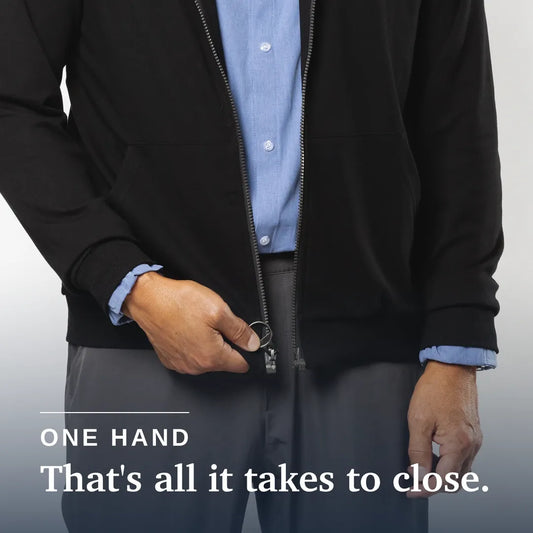
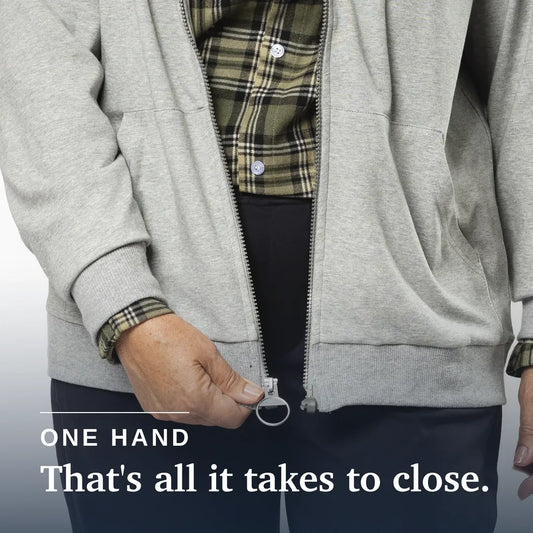
Magnetic or Easy-Start Zippers
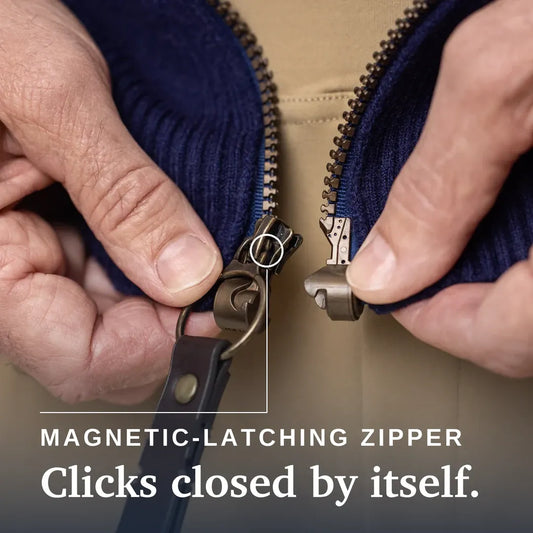
A zipper that connects more easily at the base can reduce one of the most dexterity-intensive parts of putting on a jacket.
Flexible Fabrics
Outerwear with some stretch can be easier to pull over stiff shoulders and arms.
Roomier Arm Openings
A slightly more generous arm opening can make layering easier without requiring the entire jacket to be oversized.
What Fabrics Work Well for Parkinson’s?

Fabric can affect how much effort dressing requires.
Look for materials that are:
- Soft
- Lightweight
- Flexible
- Breathable
- Easy to wash
- Able to move with the body
Stretch can be especially useful because it gives the garment more room to move over stiff joints.
The Parkinson’s Foundation also advises avoiding fabrics such as velour that can create extra friction and make movement or dressing harder.
Some people with Parkinson’s also experience changes in temperature regulation or excessive sweating. Breathable, looser-fitting clothing can be more comfortable when this occurs.
Socks and Shoes for Parkinson’s

Footwear deserves particular attention because putting on shoes often requires bending, reaching and hand dexterity.
Non-Slip Socks
The Parkinson’s Foundation recommends non-skid socks rather than loose slippers, which may slide off the feet.
Gripper socks can provide additional traction on smooth indoor surfaces.
Avoid Overly Tight Socks
Tight elastic bands can be uncomfortable and harder to pull into position.
Look for socks with enough stretch and an opening that is easy to grip.
Simplify Shoe Closures
Options can include:
- Slip-on shoes
- Elastic shoelaces
- Velcro-style closures
- Hands-free shoes
- Large zipper openings
A long-handled shoehorn or other dressing aid may also make shoes easier to put on without bending as far.
Dress When Movement Is Usually Easiest
Parkinson’s symptoms can fluctuate throughout the day.
The Parkinson’s Foundation recommends considering dressing during a time when prescribed Parkinson’s medications are working well and mobility is generally better.
For some people, that may mean waiting until later in the morning rather than dressing immediately after waking.
Because medication schedules and symptoms are individual, follow your healthcare provider’s guidance rather than changing medication timing specifically for dressing.
Nurse Taylor’s Tip:

“One thing I recommend is setting up the entire dressing routine before you start. Lay clothes out in the order they’ll be put on, keep shoes and any dressing aids within reach, and sit in a sturdy chair whenever possible. For someone with Parkinson’s, reducing extra steps can be just as helpful as changing the clothing itself. If symptoms fluctuate during the day, pay attention to when movement tends to feel easiest and, when possible, plan dressing around that window rather than rushing through it when stiffness or fatigue is worse.”
Give Yourself Enough Time
Trying to rush through a difficult dressing routine can make the experience more frustrating.
Prepare the outfit before beginning so everything is within reach.
That might mean setting out:
- Shirt
- Pants
- Undergarments
- Socks
- Shoes
- Jacket or sweater
- Any dressing aids
Reducing unnecessary trips back and forth also limits the amount of standing and walking required during the routine.
Adaptive Dressing Tools Can Help
Clothing changes are only one option.
Occupational therapists may recommend adaptive tools such as:
- Button hooks
- Dressing sticks
- Sock aids
- Long-handled shoehorns
- Larger zipper pulls
- Elastic shoelaces
An occupational therapist can help identify which part of the dressing process is creating the most difficulty and suggest techniques or equipment suited to that person's mobility and symptoms.
Tips for Caregivers Helping Someone With Parkinson’s Dress
As Parkinson’s progresses, some people may need increasing assistance with dressing.
The goal should be to provide the amount of help that is needed without unnecessarily taking over parts of the routine the person can still perform.
Helpful strategies include:
Prepare everything first
Gather the complete outfit before dressing begins.
Avoid rushing
Allow enough time for the person to participate at their own pace.
Offer simple choices
Instead of choosing the entire outfit for someone, offer a manageable choice such as:
“Would you like the blue shirt or the white shirt?”
Encourage participation
If someone can complete part of the dressing process independently, allow them to do so even if it takes longer.
Consider seated dressing
Sitting or lying down for certain parts of dressing can improve stability and may also reduce physical strain for the caregiver.
Choose clothes that open more fully
Garments with side openings, front openings or easy closures may reduce how much lifting and repositioning is required during assisted dressing.
What Should You Avoid?
No garment is universally wrong for someone with Parkinson’s, but certain features frequently make dressing more complicated.
Depending on the person's symptoms, consider avoiding:
- Very small buttons
- Tiny zipper pulls
- Complicated buckles or clasps
- Stiff, restrictive fabrics
- Very tight neck or sleeve openings
- Pants requiring several fastening steps
- Shoes that require complicated lacing
- Clothing that requires significant balance to put on
The key is identifying which features create difficulty for that individual.
Adaptive Clothing for Parkinson’s Should Still Look Like Everyday Clothing
Making clothing easier to use should not mean giving up personal style.
Someone who has worn button-down shirts for decades may still want to wear button-down shirts.
Someone who prefers chinos may not want sweatpants simply because they are easier to pull on.
That is where discreet adaptive design can be particularly useful.
Magnetic buttons can look like traditional buttons. Side zippers can be hidden in pant seams. Flexible waistbands can be incorporated into tailored pants.
The adaptive feature solves the dressing problem while the garment can continue to look familiar.
Joe & Bella Clothing for Parkinson’s

At Joe & Bella, we design adaptive clothing around specific movements that can make dressing difficult.
For someone living with Parkinson’s, useful options may include:
Magnetic Button Shirts
Hidden magnets replace traditional buttonholes, reducing the fine finger movements needed to fasten the shirt.
Shop Men's Magnetic Button Shirts
Shop Women's Magnetic Button Shirts
Magnetic-Zip Outerwear
Easier zipper systems can reduce the coordination required to start and close a traditional zipper.
Explore Joe & Bella's adaptive hoodies and sweatshirts.
Side-Zip Pants
Side openings create a wider entry point and can simplify lower-body dressing, particularly while seated.
Shop Joe & Bella Side Zip Pants
Stretch and Flexible Fabrics
Comfortable fabrics allow the garment to move more easily with the body.
Gripper Socks
Non-slip soles can provide additional traction on smooth indoor floors.
The best option depends on the person's specific symptoms and dressing routine. Explore our adaptive clothing for Parkinson’s collection to compare styles and features.
Find Joe & Bella Gripper Socks
How to Choose Clothing for Someone With Parkinson’s
Rather than shopping based only on the diagnosis, identify the part of dressing that causes the most difficulty.
Ask:
- Are buttons or zippers difficult to manipulate?
- Is reaching overhead difficult?
- Is bending toward the feet difficult?
- Is balance a concern while dressing?
- Does stiffness make sleeves or pant legs difficult to enter?
- Does the person dress independently or with assistance?
- Would dressing from a seated position help?
- Which clothing styles does the person actually enjoy wearing?
Then choose adaptive features that address those specific challenges.
The Bottom Line
Parkinson’s can make getting dressed slower and more physically demanding, but small changes to clothing and routine can remove unnecessary barriers.
Start with the specific problem:
-
If buttons are difficult, simplify the closure.
-
If stiffness makes pants difficult, increase the opening and flexibility.
-
If balance is a concern, dress while seated.
-
If bending is difficult, consider adaptive tools and easier footwear.
-
If dressing takes too much energy, reduce the number of steps.
Most importantly, adaptive clothing should support the way someone wants to dress—not replace their personal style.
The best clothing for Parkinson’s is clothing that works with the person's movement, routine and preferences while making everyday dressing a little easier.
About the Author
Taylor Thoen Donaldson, RN, is a registered nurse and former geriatric nurse who writes about caregiving, dressing challenges and adaptive clothing for Joe & Bella. Her background working with older adults informs Joe & Bella's educational content around easier dressing, caregiver support and everyday independence.
This article is intended for general educational purposes and is not a substitute for individualized medical or occupational-therapy advice.
Frequently Asked Questions (FAQs)
-
CareZips® Men's Access PantsRegular price $88Regular priceUnit price per
$108Sale price $88Sale -
CareZips® Women's Access PantsRegular price $78Regular priceUnit price per
$108Sale price $78Sale -
Everyday Magnetic Button-Down for Men | Tailored-FitRegular price $88Regular priceUnit price per
$98Sale price $88Sale -
Everyday Magnetic Flannel for MenRegular price $78Regular priceUnit price per
$98Sale price $78Sale -
Everyday Magnetic Flannel for WomenRegular price $78Regular priceUnit price per
$98Sale price $78Sale -
Everyday Side-Zip Pant for WomenRegular price $88Regular priceUnit price per
$108Sale price $88Sale -
Everyday Side-Zip Pants for MenRegular price $88Regular priceUnit price per
$108Sale price $88Sale -
HoodEase®: The Magnetic Zip-Up HoodieRegular price $98Regular priceUnit price per
$108Sale price $98Sale -
HoodEase®: The Magnetic Zip-Up Hoodie for WomenRegular price $98Regular priceUnit price per
$108Sale price $98Sale -
Magnetic Button-Down for Men | Relaxed-FitRegular price $88Regular priceUnit price per
$98Sale price $88Sale -
Signature Magnetic Cardigan for WomenRegular price $98Regular priceUnit price per
$118Sale price $98Sale -
Signature Magnetic Zip-Up Sweater For MenRegular price $118Regular priceUnit price per
$118Sale price $118 -
Signature Side-Zip Chinos for MenRegular price $108Regular priceUnit price per
$118Sale price $108Sale -
Short-Sleeve Everyday Magnetic-Button Shirt for MenRegular price $88Regular priceUnit price per
$98Sale price $88Sale