An expert talks about what “honoring” a parent really means
If you’ve had the conversation with your parents — often alongside siblings — you’ll never forget it. You prepare for it. You might even rehearse it. And still, it’s more difficult and more raw than you expected. Your parents’ reactions catch you off guard. You leave feeling unsettled — maybe guilty, maybe unsure, maybe both.
Decisions about care for aging parents are rarely just practical. They’re emotional. Complicated. And they carry significant consequences.
In Part II of our discussion with renowned gerontologist Benjamin Surmi, we ask the questions families wrestle with but too seldom ask. If you missed the first half of this interview, you can find it here.
Now we turn to the harder questions: guilt, adjustment, and what it really takes for a new place to feel like home.
Many adult children feel guilty about "giving up" on their parents by moving them to a care community. What would you say to them?
Benjamin: Your role is to honor your parent. How exactly that looks is different for every family.
But I need to be direct: There is no timeless principle that says leaving a parent alone in a suburban home is the most honorable thing to do.
I've seen adult children who truly abandon their parents: drop them somewhere, set up an auto-draft, and visit twice a year. They don't come to Mother's Day events. They don't send photos for the community newsletter. There's no depth to that relationship.
Sometimes this is the result of decades of parental neglect or abuse. Sometimes it's just selfishness. I can't pretend both situations are the same.
But choosing where your parent lives and who provides their care isn't abandonment. Abandonment is losing sight of their personhood, seeing them as a problem to solve rather than a person to love.
Thinking through care options, researching communities, making hard decisions about what's realistic given your resources? That's honoring your parent. That's taking their wellbeing seriously.
Here's the uncomfortable truth: If you're so exhausted from caregiving that you're snapping at your parent, arguing with them, controlling their movements—if you're at risk of actual abuse because you're sleep-deprived and overwhelmed—getting help isn't abandoning them. It's the opposite.
Most of us need more than just our son or daughter. We need a whole community of people in our lives. When your parent has that, you're freed up to actually be with them—to bring joy and connection instead of just managing logistics.
The real question isn't "Am I giving up?" It's "How do I show up in their life in a way that brings encouragement and refreshment?" Sometimes that means getting support so you can do exactly that.
How long does it typically take a new resident to adjust to living in a care community?
Benjamin: Every family falls somewhere on a spectrum.
Some families will drop their child off at pre-school and say, "Don't call me if they are crying." Same families let their baby cry it out at bedtime. Other families sit in the classroom for weeks, gradually extending the time apart.
Senior living transitions work the same way. Both approaches have merit, and both have risks.
The case for stepping back: Some family members are so present that their loved one never makes friends. They sit in the apartment watching TV together all week. The elder never builds relationships with caregivers because the daughter is always there, watching like a hawk. Staff become afraid to provide care naturally.
The case for staying close: Your presence shows your loved one they haven't been forgotten. You bring treats, join activities, eat meals together. You become part of the community yourself: attending events, sharing photos, maybe even leading a book club. That's the ideal when relationships are healthy.
The honest answer? Adjustment is less about time and more about how the transition was handled.
Did your parent have ownership in the decision? Did they feel their adulthood was being honored, or did they feel violated and treated like a child?
If someone feels stripped of their dignity and authority, the "adjustment period" is really a forgiveness period. That has nothing to do with the community and everything to do with how the change was made.
Some people never adjust. They go to their grave angry about being moved. Families need to face that possibility honestly, especially if the elder adamantly doesn't want the change.
But in a well-chosen community, with a respectful transition, many people adjust quickly. Especially if their home had become a prison of isolation, and suddenly they have friends, purpose, and things to anticipate.
One more thing: Research suggests that what matters most to older adults isn't the activities or the food, instead it's whether they feel at home. Can they get a cup of coffee when they want? Curl up by their favorite lamp? Walk their dog?
So don't pack light. Cover their walls with photographs. Bring their quilts, their special writing table, their tea pot. Don't buy new things thinking you're doing them a favor. They need the familiar.
Making a place feel like home: that's what makes adjustment possible.
Benjamin Surmi is VP of Innovation, Culture, and Training at Koelsch Communities, a family-owned senior living company caring for 2,000 older adults across 39 communities in eight states. He holds a Master's degree in Social Gerontology and has spent nearly 12 years reimagining what it means to age well.
-
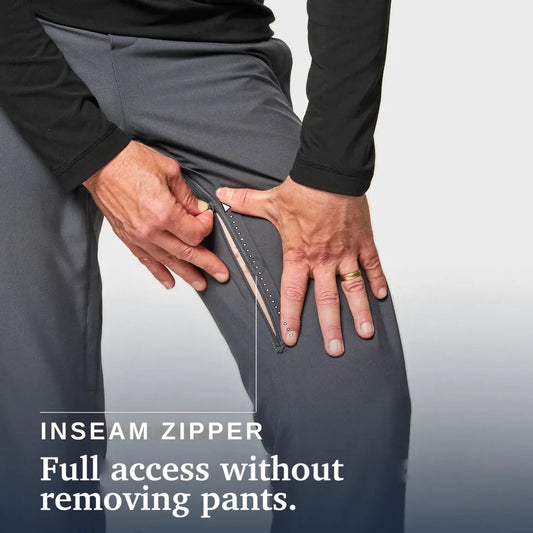
CareZips® Men's Access PantsRegular price $88Regular priceUnit price per
$108Sale price $88Sale -
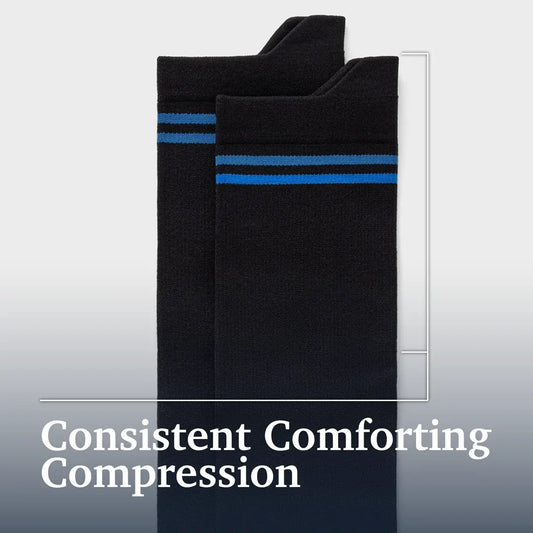
Big-Grip No-Slip Compression Socks: 3-PackRegular price $38Regular priceUnit price per
$54Sale price $38Sale -
Everyday Magnetic Button Blouse for WomenRegular price $68Regular priceUnit price per
-
Everyday Magnetic Button-Down for Men | Tailored-FitRegular price $88Regular priceUnit price per
$98Sale price $88Sale -
Everyday Magnetic Flannel for MenRegular price $78Regular priceUnit price per
$98Sale price $78Sale -
Everyday Side-Zip Pant for WomenRegular price $88Regular priceUnit price per
$108Sale price $88Sale -
Everyday Side-Zip Pants for MenRegular price $88Regular priceUnit price per
$108Sale price $88Sale -
HoodEase®: The Magnetic Zip-Up HoodieRegular price $98Regular priceUnit price per
$108Sale price $98Sale -
HoodEase®: The Magnetic Zip-Up Hoodie for WomenRegular price $98Regular priceUnit price per
$108Sale price $98Sale