Gripper socks can be useful for older adults who prefer wearing socks around the house but want more traction than ordinary socks provide on smooth indoor floors.
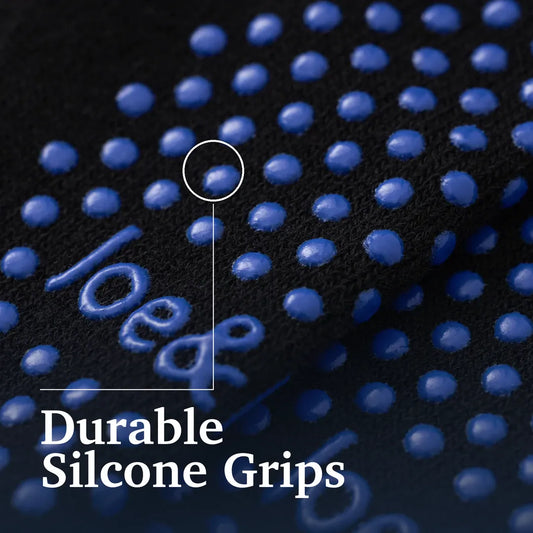
Also called non-slip, non-skid or grip socks, they have silicone, rubber or similar gripping material on the bottom of the foot.
But not every gripper sock is the same.
The best gripper socks for seniors should combine good floor contact with a comfortable fit, breathable materials and a design that is easy to put on and take off.
And while gripper socks can provide more traction than traditional socks, they should not be treated as a complete fall-prevention solution. For older adults at increased risk of falling, sturdy, properly fitting footwear is generally recommended. CDC specifically advises against relying on socks alone for fall prevention. But when you do need them, and can't wear shoes, they are a much safer alternative to regular socks.
Here is what to look for and how to choose the right style.
Quick Picks: Best Gripper Socks for Seniors
For the two types of socks Joe & Bella currently offers:
| Best for | Sock | Why |
|---|---|---|
| Everyday indoor wear | Joe & Bella Everyday Gripper Socks | Cotton-rich fabric, silicone grips, GrabTabs and a roomier fit |
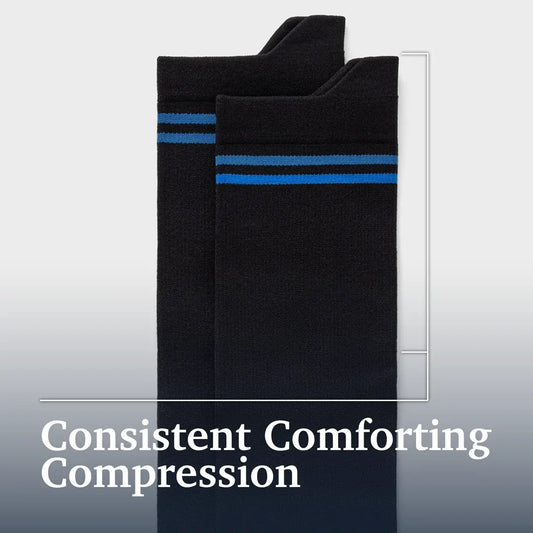
| Grip plus compression | Joe & Bella Big-Grip No-Slip Compression Socks | Silicone grips plus gentle 15–20 mmHg compression for people for whom compression is appropriate |
| Easier dressing | Everyday Gripper Socks | GrabTabs help give the hands something larger to grasp |
| Someone who dislikes hospital-looking socks | Everyday Gripper Socks | Designed to look more like ordinary everyday socks |
| Someone already advised to use compression | Big-Grip Compression Socks | Combines 15–20 mmHg compression with slip-resistant grippers |
Joe & Bella's Everyday Gripper Socks are 85% cotton and include silicone grips, moisture-wicking features, GrabTabs and a roomier design.
The Big-Grip Compression Socks provide 15–20 mmHg compression, silicone grippers, GrabTabs and four-way stretch.
Compression is not necessary or appropriate for everyone, so choose that version based on your needs rather than assuming compression makes a gripper sock better.
What Are Gripper Socks?

Gripper socks are socks with slip-resistant material attached to the bottom.
You may also see them described as:
- Non-slip socks
- Non-skid socks
- Grip socks
- Grippy socks
- Traction socks
- Hospital socks
- Slipper socks with grips
The grips create additional friction between the sock and the floor compared with an ordinary smooth sock.
They are commonly worn:
- Around the house
- In hospitals
- During rehabilitation
- In assisted-living environments
- For yoga or Pilates
- Anywhere someone wants more traction while wearing socks
The design varies considerably, so the phrase “gripper sock” can describe everything from thin hospital socks to thick slipper socks.
What Are the Best Non-Slip Socks for Elderly Adults?

There is not one universally best sock.
The right choice depends on what problem you are trying to solve.
For an older adult shopping for everyday indoor grip, I would prioritize five things:
- Grip coverage
- Proper fit
- Ease of putting them on
- Breathable materials
- Comfort around the ankle and calf
Then consider whether there is another specific need such as swelling, sensitivity to tight cuffs or prescribed compression.
1. Look for Effective Grip Coverage

The most obvious feature is the gripping material on the bottom.
Look for grips positioned across the areas of the foot that contact the floor, particularly the heel and forefoot.
A few tiny decorative dots may provide less useful contact than a grip pattern spread across more of the sole.
But more grip does not automatically mean complete protection from slipping or falling.
Floor material, moisture, gait, balance and the condition of the grips all affect traction.
If someone has significant balance problems or a history of falls, talk with a healthcare professional about appropriate footwear rather than relying on socks alone.
2. Make Sure the Sock Fits Properly
A gripper sock still needs to fit like a sock.
Avoid a pair that is so loose that the foot twists inside it or so tight that it feels uncomfortable.
Look for:
- Correct foot length
- Enough room through the toes
- A heel that stays approximately where it belongs
- A cuff that stays up without causing uncomfortable pressure
A good grip pattern on the floor cannot compensate for a sock sliding around on the foot.
3. Consider How Easy the Socks Are to Put On

Getting socks onto the feet can become difficult when bending, reaching or gripping becomes harder.
Features that may help include:
- Stretchy openings
- Pull tabs
- Flexible fabric
- Larger areas to grasp
- A roomier fit
Joe & Bella's Everyday Gripper Socks use GrabTabs, which provide a larger place to hold while pulling the sock on. They also use a roomier design than a traditional close-fitting sock.
If reaching the feet is the primary issue rather than the sock itself, a sock aid may also be useful.
4. Choose Breathable Materials for Everyday Wear
For socks worn for hours at a time, material matters.
Cotton-rich fabrics can feel soft and familiar, while synthetic fibers can improve stretch, moisture management and durability.
Joe & Bella's Everyday Gripper Socks use:
- 85% cotton
- 10% nylon
- 5% spandex
The ideal material depends on whether the priority is softness, warmth, moisture management or stretch.
5. Check the Cuff
Some older adults dislike socks that leave a tight mark around the ankle or calf.
A roomier cuff can make everyday socks more comfortable, particularly when standard socks feel restrictive.
However, persistent swelling in the feet, ankles or legs should not simply be solved by buying looser socks.
If swelling is new, significant or unexplained, it is worth discussing with a healthcare professional.
Best Everyday Gripper Socks for Seniors
For someone looking primarily for an everyday indoor sock with added traction, Joe & Bella's Everyday Gripper Socks are the more straightforward choice.
They include:
- Silicone grippers
- GrabTabs for easier pulling
- Cotton-rich fabric
- Moisture-wicking features
- A roomier fit
They are designed to look like regular socks rather than institutional hospital socks, which may matter to someone who wants an everyday option they are happy to keep wearing.
They come in several neutral colors and two sizes.
Best Gripper Socks With Compression

Some people want the traction of a gripper sock combined with compression.
Joe & Bella's Big-Grip No-Slip Compression Socks provide 15–20 mmHg compression along with silicone grippers.
They also include:
- GrabTabs
- Four-way stretch
- Multiple colors
- Two size options
These are better thought of as compression socks that also have grippers, not as the default choice for every senior.
If you have been advised to use compression or already wear compression socks, the combination may be convenient.
If you are unsure whether compression is appropriate for you, discuss it with a healthcare professional.
Best Gripper Socks for Seniors With Swollen Feet\

The search data shows meaningful interest in “non slip socks for elderly with swollen feet.” That query currently generates more than 300 impressions for this page.
I would answer it, but carefully.
For swollen feet or ankles, look first at fit.
Features that may be useful include:
- Extra room through the foot
- Stretchy fabric
- A cuff that does not feel overly restrictive
- Appropriate sizing
Do not automatically choose compression simply because swelling is present.
Compression can be helpful in certain situations, but the appropriate type and level depend on why the swelling is occurring.
If swelling is persistent or significant, ask a healthcare professional what kind of sock is appropriate.
Best Non-Slip Socks for Elderly Women
You generally do not need a different grip technology for women.
The important factors are still:
- Correct sizing
- Comfortable fit
- Grip coverage
- Breathability
- Ease of dressing
Choose the size based on the person's foot rather than assuming a sock marketed specifically to women will work better.
Color and style can then be a matter of preference.
Best Non-Slip Socks for Elderly Men
The same principle applies to men.
Pay particular attention to size if the wearer has a larger foot.
A sock stretched beyond its intended size may not fit or position the grip pattern correctly.
Look for a properly sized sock with enough room through the toes and a cuff that stays comfortably in place.
Gripper Socks vs Slipper Socks
These terms sometimes overlap, but they are not always the same thing.
Gripper Socks
Usually look more like ordinary socks and add silicone or rubber grips to the sole.
They tend to be:
- Lighter
- More flexible
- Easier to wash
- Easier to wear in bed or while lounging
Slipper Socks
Usually have more cushioning or a thicker, warmer construction.
They may feel more like a hybrid between a sock and a slipper.
Which one is better depends on whether the priority is everyday versatility or warmth and cushioning.
Neither should automatically be treated as a replacement for supportive footwear when someone has significant balance or mobility concerns.
Are Gripper Socks Safer Than Regular Socks?
On smooth indoor floors, grip material can provide more traction than the smooth bottom of an ordinary sock.
That is the practical reason hospitals and care environments often use them.
But the evidence that gripper socks actually prevent falls is not strong enough to say that wearing them will 100% prevent someone from falling.
CDC recommends well-fitting shoes with nonslip soles for older adults and advises against walking around only in socks as a fall-prevention strategy.
So think of gripper socks as:
Socks designed to provide more traction than ordinary socks
not:
A medical device guaranteed to prevent falls
Are Gripper Socks Good for Around the House?
They can be a practical option for someone who prefers wearing socks indoors and wants more grip than ordinary socks provide.
They may be especially convenient for:
- Getting out of bed
- Lounging at home
- Hospital stays
- Short indoor walking
- Situations where putting shoes on repeatedly is inconvenient
Someone with a significant fall risk may still be better served by properly fitting supportive shoes or slippers.
Can Seniors Wear Gripper Socks With Shoes?
Sometimes, but check the fit.
The grip material can make a gripper sock slightly thicker or create additional friction inside a shoe.
Make sure the shoe still fits correctly and the sock does not bunch.
If a gripper sock makes a shoe feel too tight, switch to a regular properly fitting sock for shoe wear.
How Often Should Gripper Socks Be Replaced?
There is no universal replacement schedule.
Inspect them regularly.
Replace a pair if:
- Grip material is peeling away
- Grip areas have worn smooth
- Holes appear
- Elastic no longer holds the sock in place
- The sock twists excessively on the foot
- The fit has changed
Follow the manufacturer's washing instructions because excessive heat or improper care can shorten the life of the gripping material.
Joe & Bella recommends washing its Everyday Gripper Socks inside out in cold water on a gentle cycle and tumble drying low to help preserve the gripper dots.
How to Choose the Best Gripper Socks for an Older Adult
Before buying, ask:
Where will they be worn?
Someone mainly wearing socks around the house may want a different design than someone using them during a hospital stay.
Is putting socks on difficult?
If yes, prioritize stretch, larger pull areas or GrabTabs.
Are ordinary cuffs uncomfortable?
Look for a roomier fit rather than a restrictive band.
Is compression already part of the person's routine?
If yes, a gripper compression sock may combine two useful features.
Does the person have a significant fall risk?
If yes, do not rely solely on gripper socks. Ask a healthcare professional whether more supportive footwear would be safer.
Finding the Right Gripper Sock
The best gripper sock is not simply the pair with the most rubber on the bottom.
It should fit properly, feel comfortable enough to keep wearing and work for the person's actual dressing needs.
For everyday indoor use, Joe & Bella's Everyday Gripper Socks combine silicone grips with a cotton-rich fabric, GrabTabs and a roomier design.
For someone who already wants gentle compression, the Big-Grip No-Slip Compression Socks combine grippers with 15–20 mmHg compression.
Neither should be treated as a guarantee against falls.
Instead, think of gripper socks as one practical clothing option for adding traction when someone prefers to wear socks indoors.
About the Author
Ben Graham is the VP of Marketing at Joe & Bella. He leads content creation and partnerships, bringing together caregiving, aging experts and adaptive-clothing experts so Joe & Bella customers are fully equipped with knowledge to help them on their aging and caregiving journeys. With deep experience in research and writing, Ben ensures that all content is accurate and backed by research.
Frequently Asked Questions (FAQs)
-
Big-Grip No-Slip Compression Socks: 3-PackRegular price $38Regular priceUnit price per
$54Sale price $38Sale -
Everyday Gripper Socks 3-PackRegular price $44Regular priceUnit price per
$54Sale price $44Sale