Written by: Taylor Thoen Donaldson, RN, Joe & Bella's Chief Customer Happiness Officer

Helping someone with dementia get dressed can become one of the hardest parts of the day. What used to feel automatic can turn into a stressful routine filled with confusion, resistance, and discomfort.
That is because dressing is not just about clothing. It involves memory, sequencing, balance, hand coordination, sensory comfort, and emotional security. When those abilities change, even a familiar shirt or pair of pants can feel difficult to manage.
This is where adaptive clothing for dementia can help. The right clothing can reduce frustration, support dignity, and make daily dressing easier for both the person getting dressed and the caregiver helping.
Why dressing becomes harder with dementia
Dressing requires a surprising number of steps. A person needs to recognize the clothing item, understand what it is for, remember the order of getting dressed, and physically manage closures, layers, and fit.
For people living with dementia, common dressing challenges may include:
- Forgetting what goes on first
- Not recognizing a shirt, sweater, or pair of pants
- Putting clothes on backward or inside out
- Feeling overwhelmed by too many choices
- Struggling with buttons, zippers, or waistbands
- Becoming upset by unfamiliar fabrics or tight clothing
Physical changes often add to the problem. Many older adults with dementia are also managing arthritis, reduced mobility, weakness, or balance issues. That can make traditional clothing even harder to put on safely.
There is also an emotional side. Someone who once dressed independently may feel embarrassed needing help. They may become agitated if they feel rushed, confused, cold, or uncomfortable.
What is adaptive clothing for dementia?
Adaptive clothing for dementia is everyday-looking clothing designed to make dressing easier, safer, and more comfortable for people living with memory loss and changing physical needs.
Instead of relying on small buttons, stiff zippers, or complicated closures, dementia clothing often includes features that simplify dressing and reduce stress.
Helpful features may include:
- Magnetic closures instead of traditional buttons
- Elastic waistbands that are easier to manage
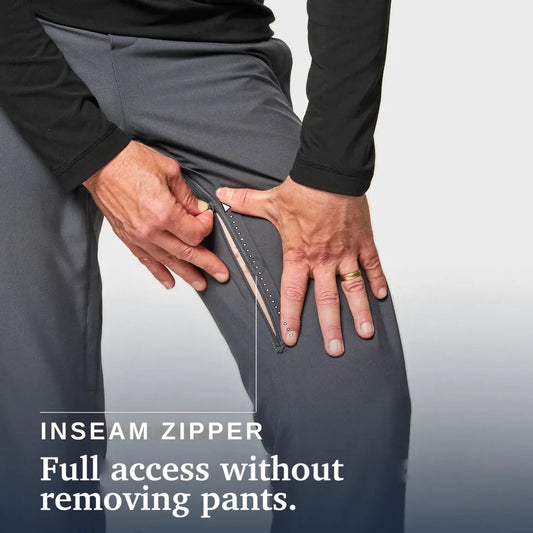
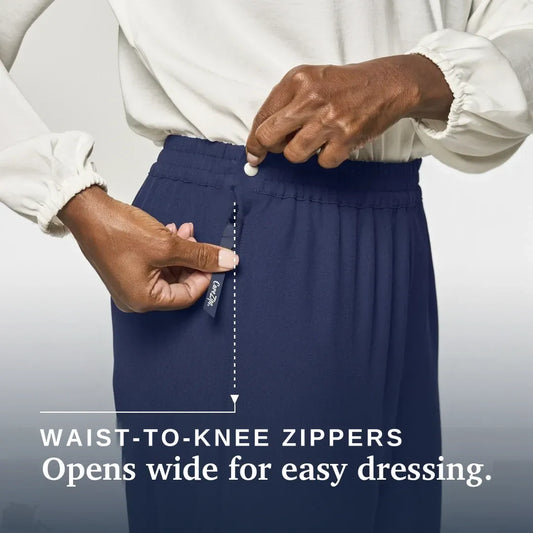
- Side-zip or open-back designs for easier seated dressing
- Soft fabrics that feel more comfortable on sensitive skin
- Simple openings that reduce confusion and resistance
The goal is not just convenience. Good memory care clothing helps preserve comfort, personal style, and a sense of dignity.
How adaptive clothing helps in memory care
The best adaptive clothing for Alzheimer’s patients and people with other forms of dementia reduces the number of physical and cognitive barriers involved in dressing.
It can help by:
- Reducing steps in the dressing process
- Making closures easier to manage
- Lowering frustration for both caregivers and loved ones
- Supporting safer dressing while seated or during transfers
- Improving comfort throughout the day
- Preserving familiar style so the person still feels like themselves
For example, magnetic shirts can look like classic button-downs while removing the difficulty of fastening small buttons. Side-zip pants can make dressing and toileting easier. Gripper socks can help reduce slips on smooth floors.
These small changes can make a big difference in daily routines.
Best features to look for in clothing for dementia patients
Not all adaptive apparel is equally helpful for memory care. When choosing clothing for dementia patients, focus on comfort, clarity, and ease of use.
Closures and access
Look for:
- Magnetic fasteners instead of small buttons
- Easy zippers or side openings
- Wide neck openings that reduce struggle
- Pants designed for easier toileting and seated dressing
Comfort and safety
Prioritize:
- Soft, breathable fabrics
- Flat seams for sensitive skin
- Gentle waistbands that do not dig in
- Gripper socks or slip-resistant footwear
Familiar style
Choose clothing that:
- Looks like everyday apparel
- Feels familiar in color and shape
- Supports personal style
- Avoids an overly medical look
That last point matters. People are more likely to feel calm and confident in clothing that still feels like their own.
Caregiver tips for easier dressing
Even the best adaptive clothing works better when paired with a calm, respectful routine.
Try these approaches:
- Lay out clothes in order so the process feels more predictable
- Limit choices to one or two options
- Use simple language and one-step instructions
- Dress at the same time each day when possible
- Allow extra time so the person does not feel rushed
- Let them help with any part they can still manage
It also helps to pay attention to triggers. If a loved one resists dressing, ask whether the issue may be discomfort, confusion, temperature, embarrassment, or fear rather than simple refusal.
When to consider adaptive clothing for Alzheimer’s patients
It may be time to switch to adaptive clothing if your loved one:
- Takes much longer to get dressed
- Avoids certain clothes they used to wear
- Struggles with buttons or zippers
- Becomes agitated during dressing
- Needs more hands-on help than before
- Has trouble with toileting access or layered clothing
The earlier you make thoughtful changes, the easier it can be to reduce daily stress and help preserve independence.
Dressing with dignity in memory care
Adaptive clothing is not only about making tasks easier. It is also about protecting dignity.
A person living with dementia may no longer explain exactly why dressing feels hard, but they still feel discomfort, embarrassment, and loss of control. Clothing that is easier to manage can help reduce those feelings.
When dressing becomes calmer, there is more room for patience, comfort, and connection. That matters just as much as the clothing itself.
How Joe & Bella supports easier dressing
Joe & Bella designs adaptive apparel to help older adults dress with more comfort, ease, and dignity. Options like magnetic shirts, side-zip pants, CareZips, and gripper socks are designed to support common memory care challenges while still looking like everyday clothing.
For families looking for adaptive clothing for dementia, the best options are often the ones that combine easier function with familiar style.
Final thoughts
Dressing challenges are common in dementia care, but they should not be dismissed as a minor inconvenience. Clothing can either add stress to the routine or help make it gentler and more manageable.
The right adaptive clothing for dementia can reduce confusion, improve comfort, support safer dressing, and help loved ones maintain a sense of identity. For caregivers, that can mean less struggle and more calm during one of the most personal parts of the day.
About the Author:
Taylor is Joe & Bella's Chief of Customer Happiness and a former geriatric nurse. Known to our customers as "Nurse Taylor," she brings a frontline caregiver's perspective and medical expertise to everything we do, helping ensure our products hold up not just in concept, but in the daily reality of dressing someone with limited time, limited mobility, and a lot on the line. Have a question or topic you'd like her to cover? Just reply in the comment section below!
A note from Joe & Bella: Our content is intended for general informational purposes only. While we share insights from our own Nurse Taylor and other health and wellness experts, please know that they are not your healthcare provider and nothing here should be taken as medical advice, diagnosis, or treatment. Every person's situation is different. Please consult your own physician, nurse, or healthcare professional before making any decisions about your health or the care of a loved one.
Frequently Asked Questions (FAQs)
-
CareZips® Men's Access PantsRegular price $78Regular priceUnit price per
$108Sale price $78Sale -
CareZips® Women's Access PantsRegular price $74Regular priceUnit price per
$108Sale price $74Sale