There's a moment that happens in a lot of families, and almost nobody talks about it.
You offer to help your parent get dressed. You reach over to button a shirt they're struggling with. You suggest it might be time to let someone else assist with the morning routine.
And they pull away. They get quiet. They say they're fine, even though you can both see that they're not. Or you simply stop seeing them wear the clothes that now give them a hard time.
That's not stubbornness. That's pride. And watching someone you love struggle to protect it is one of the most tender things caregiving asks of you.
Why Aging Parents Resist Help With Dressing
For most of our parents' lives, getting dressed was the most private, independent thing they did. Nobody helped. Nobody needed to be there.
When that changes, gradually or suddenly, it doesn't just affect the body. It affects identity. Your parent isn't just struggling with a button. They're confronting the fact that something has shifted, and that shift is visible to the people they love most.
That's a lot to feel at 7 in the morning.
As a geriatric nurse, I watched this play out regularly. The resident who insisted on dressing herself long past the point where it was safe, simply because the alternative felt unbearable. The man who refused to let anyone help him with his shoes, not because he didn't need it, but because accepting help meant admitting something he wasn't ready to admit.
In my experience, most people would rather accept help from a professional caregiver than from a family member. Not because they love them less, but because keeping that boundary protects something important between them.
The embarrassment wasn't weakness. It was grief: the quiet kind that comes from losing something you never thought you'd have to give up.
How to Help a Parent Who's Embarrassed About Needing Assistance
The instinct is to reassure. To say "it's okay, everyone needs help sometimes" or "I don't mind at all." And while those things are true, they often land as confirmation of what your parent already fears: that something is wrong, and now you can see it too.
A few things that tend to work better:
1. Make it about the clothes, not the person.
"These buttons are impossible. I struggle with them too" shifts the problem away from your parent's body and onto something external. It's a small reframe, but it changes the dynamic entirely.
2. Give them control wherever you can.
Ask what they'd like to wear before you start helping. Let them do what they can, even if it takes longer. Autonomy, even partial autonomy, protects dignity in a way that efficient assistance sometimes doesn't.
3. Don't make it a bigger moment than it needs to be.
The more matter-of-fact you can be about helping, the easier it is for your parent to receive that help. Treat it like handing someone a glass of water, not like a milestone.
4. Find adaptive clothing that reduces the need for help in the first place.
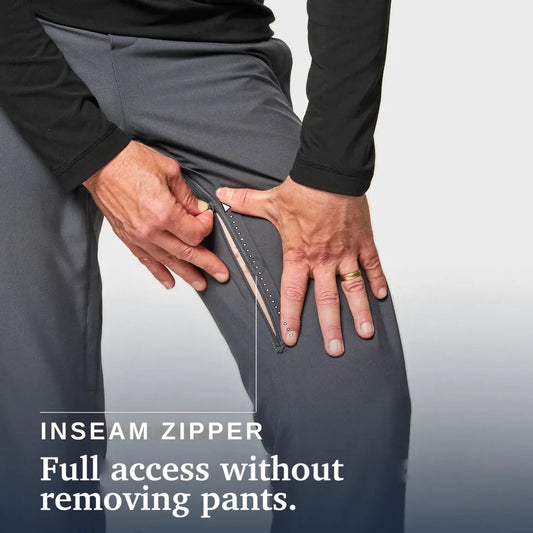
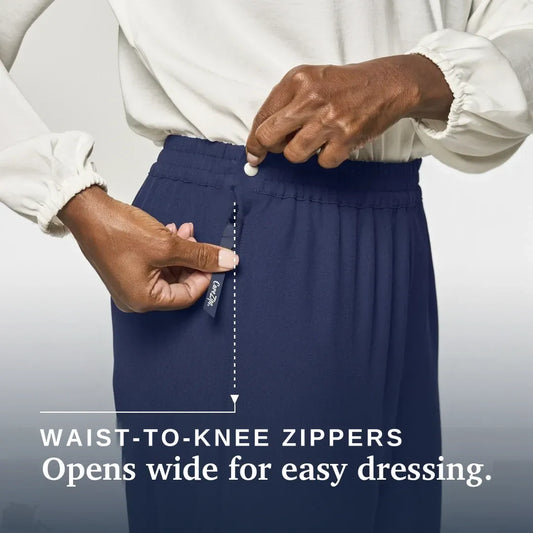
This is where I see the biggest difference in my work (and why I love Joe & Bella). When a parent can manage more of their own dressing, because the clothes actually cooperate, the embarrassment decreases significantly. Features like magnetic closures, full-length side zippers, and easy-access adaptive pants aren't just convenient. They give people something back: the feeling of doing it themselves.
A Note for Caregivers
If your parent pulls away when you try to help, try not to take it personally. The resistance isn't about you. It's about them holding on to something that still feels like theirs.
Your job isn't to take that away. It's to make the transition as gentle, as dignified, and as private as possible.
That's not a small thing. That's everything.
SHOP ADAPTIVE CLOTHING
Because your clothes should cooperate, not complicate.
About the Author
Nurse Taylor Donaldson is Joe & Bella's Head of Customer Success and a former geriatric RN. She writes from experience and genuine care — but she isn't your nurse, and this article isn't medical advice. For anything related to your health or the health of someone you're caring for, please talk to your own healthcare provider. They know your situation in ways we can't.
-
CareZips® Men's Access PantsRegular price $88Regular priceUnit price per
$108Sale price $88Sale -
CareZips® Women's Access PantsRegular price $78Regular priceUnit price per
$108Sale price $78Sale -
Everyday Magnetic Button-Down for Men | Tailored-FitRegular price $88Regular priceUnit price per
$98Sale price $88Sale -
Everyday Magnetic Flannel for WomenRegular price $78Regular priceUnit price per
$98Sale price $78Sale