Wheelchair fashion is about more than finding clothes that are easy to put on. Clothing also needs to fit well while seated, stay comfortable throughout the day, and reflect the wearer's personal style.
The challenge is that most clothing is designed and fitted on a standing body. Once seated, proportions change. Pants can pull down in the back, shirts may bunch around the waist, jacket hems fall differently, back pockets can become uncomfortable, and dresses or wide-leg pants may need different lengths.
That does not mean wheelchair users need an entirely separate wardrobe. Often, the key is knowing which fits, fabrics, silhouettes and design details work best from a seated position—and when adaptive clothing or tailoring can help.
This guide focuses specifically on wheelchair fashion and style: what to wear, how clothing should fit while seated, choosing dresses and formalwear, adapting regular clothing, and balancing comfort with personal style.
Looking for advice on getting dressed while seated, adaptive closures or caregiver-assisted dressing? Read our complete guide to dressing in a wheelchair.
Why Clothing Fits Differently in a Wheelchair
One of the most important rules of wheelchair fashion is simple:
Judge clothing while seated, not just while standing.
Sitting changes how a garment falls on the body.
For example:
- Pants may pull lower in the back and higher in the front.
- Shirt and jacket hems may bunch around the waist or lap.
- Fabric can collect behind the knees or lower back.
- Back pockets and thick seams may create unnecessary bulk beneath the body.
- Sleeves may feel shorter when reaching forward.
- Long skirts, dresses or wide pant legs may fall closer to wheels or footplates.
A garment can look perfectly proportioned while standing and feel completely different after several hours of sitting.
Whenever possible, try clothing on from the position in which it will actually be worn most often.
1. Start With Seated Proportions
Fit is the foundation of wheelchair style.
Rather than automatically sizing up for more room, look at where the garment is actually pulling or bunching.
For pants, check:
- Coverage at the back waist
- Comfort across the abdomen
- Excess fabric behind the knees
- Where the hem falls while seated
- Whether the waistband shifts during movement or transfers
For tops and jackets, check:
- Whether the shirt rides up at the waist
- Where the hem falls across the lap
- Whether the shoulders pull when reaching forward
- Sleeve length with the arms in a typical seated position
- Whether fabric bunches behind the back
A better seated fit usually looks more polished, too. Clothing that stays where it is supposed to tends to look intentional rather than constantly needing adjustment.
2. Choose Pants for How They Look While Sitting
Pants are one of the biggest differences between standing and seated fashion.
Traditional pants are typically patterned for someone who spends much of the day upright. For wheelchair users, that can mean the back waist pulls down while the front rises or bunches.
Wheelchair-friendly pants may include:
- A higher rise in the back
- A softer or more flexible waistband
- Stretch through the hips and thighs
- Less excess fabric behind the knees
- Flat or minimal seams
- Reduced bulk from back pockets
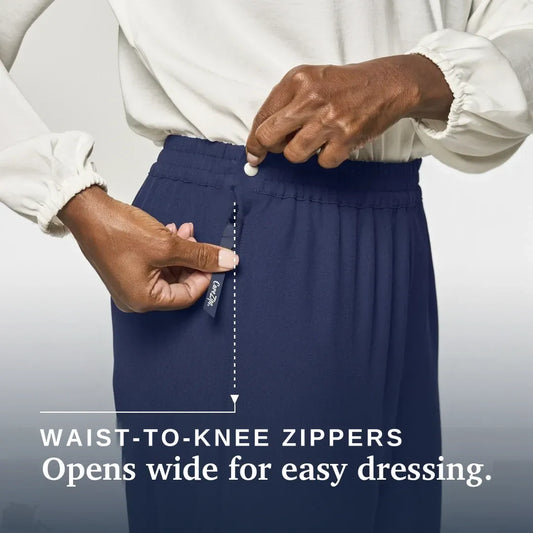
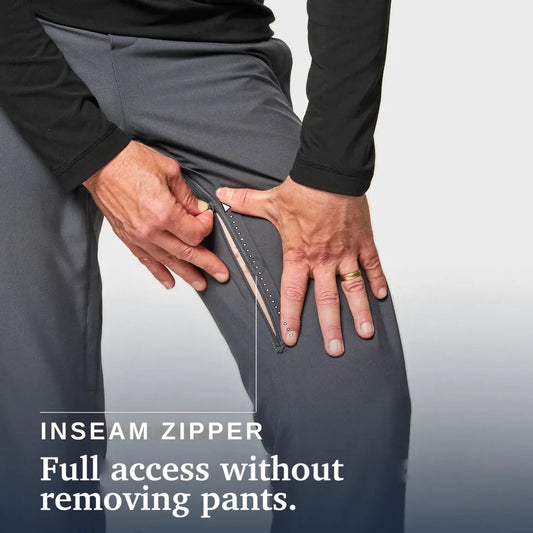
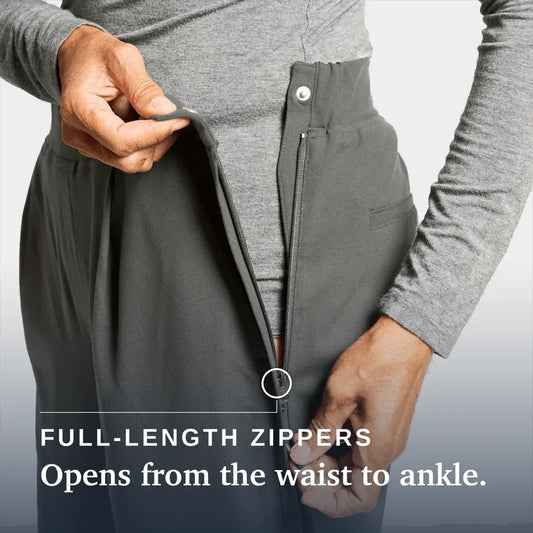
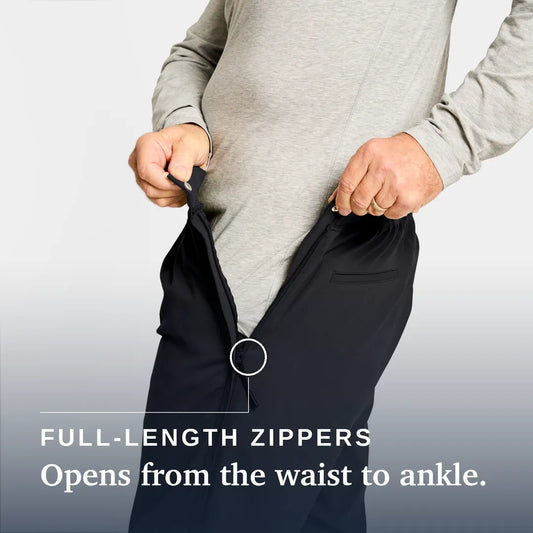
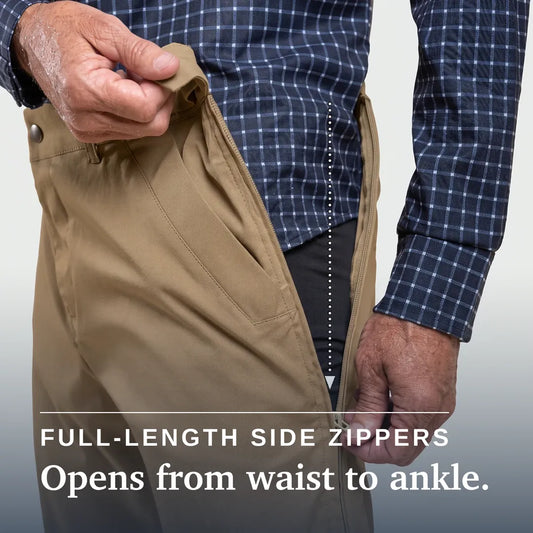
- Side openings or adaptive closures
- But adaptive construction is not the only consideration.
Think About the silhouette
Different pant shapes create different looks while seated.
Straight-leg pants can create a clean, classic line without excessive fabric.
Tapered pants can help keep fabric closer to the legs and away from wheels or footplates.
Wide-leg pants can make a strong fashion statement but may require more attention to length and fabric volume.
Chinos or tailored pants can create a polished look when the rise and waistband remain comfortable while sitting.
Stretch pants can work particularly well when you want the appearance of structured pants without the rigidity of traditional woven trousers.
The best option depends on personal style, mobility and how the garment interacts with the wheelchair.
3. Pay Attention to Pant Length
Pant length can look very different once the knees are bent.
A pair of pants that reaches the correct place while standing may appear significantly shorter when seated.
When trying on pants, evaluate the hem with the legs in their normal wheelchair position.
Consider:
- How much ankle you want visible
- Whether socks or compression socks will show
- Whether the pants ride upward significantly
- Whether longer hems could interfere with footplates or wheels
There is no universal correct length. The important part is choosing the length intentionally for the seated position.
4. Consider Pocket Placement
Pocket placement is an easy detail to overlook.
Traditional back pockets may be difficult to reach from a seated position, and sitting on bulky pockets, buttons or objects stored inside them may be uncomfortable.
Depending on the garment, better options can include:
- Side pockets
- Front pockets
- Thigh pockets
- Low-profile zip pockets
When evaluating a pair of pants, don't just ask whether it has enough pockets. Ask whether those pockets can actually be reached and used comfortably while seated.
5. Choose Tops That Stay Polished While Seated
Shirts often change shape when the body is sitting.
Fabric may gather around the stomach, the back can rise, and shirts that are very long may bunch across the lap.
Look for tops that:
- Have enough room through the shoulders
- Do not pull across the chest when reaching forward
- Maintain coverage at the back
- Avoid excessive fabric around the waist
- Feel comfortable beneath a seat belt, positioning belt or other equipment if used
A slightly longer back hem can sometimes improve seated coverage, but longer is not automatically better. Too much fabric can create its own bulk.
Again, evaluate the garment from the seated position.
6. Jackets and Outerwear Need Different Proportions
Long jackets and coats can become cumbersome when seated.
Extra fabric may collect underneath the body, bunch around the hips or extend into areas where it is difficult to manage.
Shorter jackets, cropped outerwear and styles designed to end around the hip can often be easier to position while sitting.
When choosing outerwear, consider:
- Where the jacket ends while seated
- Whether you are sitting on the back hem
- Whether the front bunches across the lap
- How easily the zipper or closure can be reached
- Sleeve length with the arms extended forward
- Whether the shoulders allow comfortable movement
A jacket that fits beautifully while standing may need different proportions to look equally polished while seated.
7. Fabric Can Change the Entire Look and Feel
Fabric matters especially when clothing will be worn seated for long periods.
Stretch
A small amount of stretch can help clothing move with the body without looking oversized.
This can be particularly helpful in:
- Pants
- Chinos
- Jeans
- Button-down shirts
- Jackets and sweaters
Drape
Fabrics that drape well often fall more naturally over a seated body instead of creating stiff folds.
That can be especially useful for dresses, skirts and looser tops.
Weight
Heavy fabrics can create unnecessary bulk when they gather beneath or around the body.
Light- to medium-weight fabrics are often easier to manage, although structure may still be desirable depending on the garment.
Breathability
People who remain seated for extended periods may appreciate fabrics that allow airflow and help manage temperature.
Durability
Clothing may experience repeated friction against the chair, armrests or other surfaces, so fabric quality matters.
Look for material that can withstand regular wear and washing while maintaining its shape.
8. Dresses Can Work Beautifully for Wheelchair Users
There is no reason wheelchair users need to avoid dresses.
The key is choosing the dress based on how it behaves while seated.
Consider:
Length
A dress may appear much shorter once seated.
At the same time, very long dresses can create excess fabric around the legs or potentially interfere with wheels.
Try the dress while sitting and evaluate the hem from both the front and sides.
Waist placement
A waistline that looks flattering while standing may hit differently while sitting.
Empire waists, natural waists and dropped waists can all create very different seated silhouettes.
There is no universally best choice—choose whichever creates the proportion you prefer from your normal seated position.
Fabric volume
Large amounts of fabric can look dramatic, but they can also bunch around the hips, lap or wheels.
If you like a fuller silhouette, pay close attention to how the material falls around the chair.
Closures
Think about how easily the dress can be put on and taken off.
Front openings, stretch fabrics, larger openings or alternative closures may be easier than small back zippers depending on mobility and dexterity.
9. Formalwear and Wedding-Guest Outfits for Wheelchair Users
Formal clothing brings another set of considerations because suits, dresses and occasion wear are often more structured than everyday clothing.
For dresses
Look at:
- Seated hem length
- Fabric around the wheels
- How the neckline sits when seated
- Whether the waistline remains flattering
- Closure accessibility
- Whether embellishments or seams create uncomfortable bulk
For suits and tailored clothing
A suit jacket may need a slightly different length or shape to sit cleanly without pooling around the hips.
For trousers, seated rise and waistband comfort become particularly important because formal pants often use less stretch than casual pants.
A tailor can sometimes make a dramatic difference by adjusting a traditional garment specifically for seated wear.
10. Tailoring Regular Clothing for Wheelchair Users
Adaptive clothing is not the only option.
Many regular garments can work well with thoughtful alterations.
A tailor may be able to modify clothing by:
- Raising the back rise of pants
- Adjusting the front rise
- Shortening or reshaping a jacket
- Changing sleeve length for a seated arm position
- Relocating pockets
- Removing unnecessary back-pocket bulk
- Adding side openings
- Replacing difficult closures
- Adjusting hems for a seated leg position
If you already own clothing you love, alterations can sometimes make more sense than replacing it.
Bring the wheelchair to the fitting whenever possible so alterations can be evaluated from the actual seated position.
11. Adaptive Clothing Can Still Look Like Regular Fashion
Adaptive clothing does not need to look medical.
Many adaptive garments now use functional features that are either discreet or completely hidden.
Examples include:
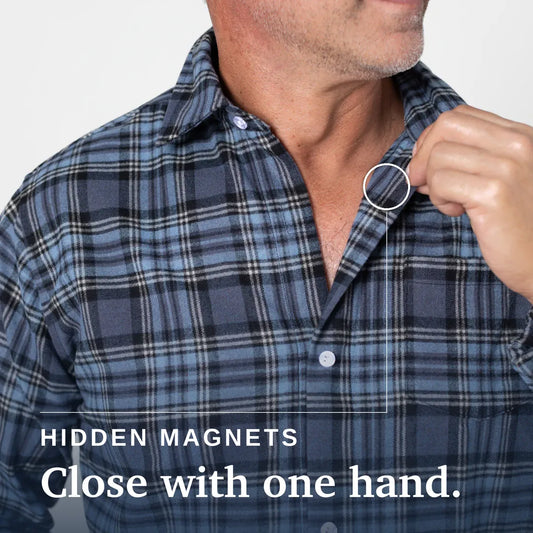
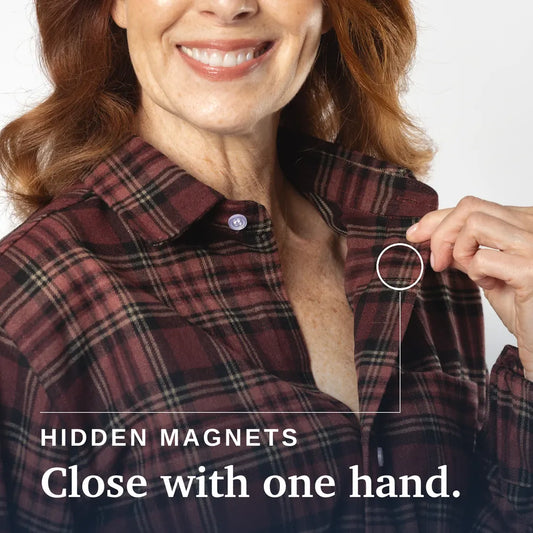
- Magnetic buttons hidden behind traditional-looking button plackets
- Magnetic or easier-to-start zippers
- Side zippers incorporated into pant seams
- Stretch waistbands that still resemble tailored pants
- Strategic openings that are difficult to notice when closed
- Seated-fit construction built into otherwise conventional clothing
The goal is not to make someone look like they are wearing “adaptive clothing.”
The goal is to give the wearer more options.
For wheelchair users who want traditional-looking clothing with easier dressing features, explore our wheelchair-friendly clothing collection.
12. Wheelchair Fashion for Women
Women's wheelchair fashion should start with the same question as anyone else's wardrobe:
What do you actually like wearing?
From there, adapt the fit rather than abandoning the style.
Depending on personal preference, that could include:
- Tailored pants with stretch
- Side-zip pants
- Soft blouses
- Magnetic button shirts
- Cardigans
- Cropped jackets
- Dresses
- Skirts
- Coordinated separates
When evaluating women's clothing from a seated position, pay particular attention to dress and skirt length, waist placement, shirt hems, pocket placement and the amount of fabric around the lap.
13. Wheelchair Fashion for Men
For men, common wardrobe staples can still work well with seated-fit adjustments.
Options might include:
- Chinos
- Stretch trousers
- Magnetic button-down shirts
- Polos
- Sweaters
- Zip-up jackets
- Tailored blazers
- Casual pants with adaptive openings
For a polished outfit, fit through the shoulders, waistband and pant rise usually matters more than simply sizing up.
A garment that follows the body cleanly while seated often looks sharper than a larger garment chosen only to create extra room.
14. Don't Automatically Size Up
It can be tempting to buy larger clothing because sitting makes some areas feel tighter.
But an oversized garment may create new problems:
- Extra fabric bunching behind the body
- Excess material around the lap
- Sleeves that are too long
- Dropped shoulders
- Pants that shift or twist
Instead, identify where the fit problem actually occurs.
Sometimes the answer is stretch, a different rise, a different cut or a small alteration—not a larger size.
15. Build Outfits Around Personal Style, Not the Wheelchair
A wheelchair is part of how someone moves through the world. It does not need to dictate an entire aesthetic.
If you like:
- bright colors, wear bright colors
- minimalist clothing, keep it simple
- classic tailoring, choose structured pieces that work seated
- streetwear, adapt the proportions
- dresses, wear dresses
- denim, find denim with the right stretch and seated fit
Adaptive design should expand wardrobe options rather than narrow them.
Function matters. So does looking in the mirror and recognizing yourself.
16. Know When Function Matters More Than Fashion
Style does not exist separately from comfort.
A garment may look great for a few minutes but become frustrating if it:
- creates pressure while seated
- constantly rides up
- requires repeated adjustment
- makes toileting difficult
- interferes with transfers
- is difficult to put on or remove
- restricts upper-body movement
The best wheelchair fashion does both: it looks like something you genuinely want to wear and works for the way you actually live.
Wheelchair Fashion vs. Wheelchair-Friendly Clothing
These terms overlap, but they are not exactly the same.
Wheelchair fashion is about how clothing looks, fits and is styled from a seated position.
Wheelchair-friendly clothing is clothing whose construction or features make it more comfortable or functional for wheelchair users.
A garment can be fashionable without being adaptive.
An adaptive garment can also be fashionable.
The strongest wardrobe often includes both: regular clothing that fits well while seated and adaptive pieces where specialized construction genuinely makes life easier.
What Should You Wear in a Wheelchair?
There is no single correct wheelchair wardrobe.
Start by looking for clothing that:
- Fits properly while seated
- Does not bunch or create uncomfortable pressure
- Allows the movement you need
- Uses fabrics you enjoy wearing
- Has useful, accessible pockets
- Falls at the right length from a seated position
- Is easy enough for you to put on and remove
- Reflects your actual personal style
Then decide whether traditional clothing, tailoring or adaptive apparel best solves each need.
The wheelchair should influence how you evaluate fit—not determine what you are allowed to wear.
The Bottom Line
Good wheelchair fashion begins by designing and choosing clothing for the position in which it will actually be worn.
That means checking proportions while seated, thinking differently about rises and hems, choosing comfortable fabrics, considering pocket placement and understanding how dresses, jackets and formalwear fall in a wheelchair.
Sometimes adaptive clothing is the best solution. Sometimes a small alteration is enough. Sometimes a regular garment already works perfectly.
The most important thing is that comfort and function do not replace personal style.
They should make it easier to express it.
About the Author:
Nurse Taylor Thoen Donaldson is Joe & Bella's Chief of Customer Happiness and a former geriatric nurse. Known to our customers as "Nurse Taylor," she brings a frontline caregiver's perspective to everything we do, helping ensure our products hold up not just in concept, but in the daily reality of getting someone dressed with limited time, limited mobility, and a lot on the line. Have a question or a topic you'd like her to cover? Just reply to this email.
A note from Joe & Bella: Our content is intended for general informational purposes only. While we share insights from our own Nurse Taylor and other health and wellness experts, please know that they are not your healthcare provider and nothing here should be taken as medical advice, diagnosis, or treatment. Every person's situation is different. Please consult your own physician, nurse, or healthcare professional before making any decisions about your health or the care of a loved one.
Frequently Asked Questions (FAQs)
-
CareZips® Women's Access PantsRegular price $74Regular priceUnit price per
$108Sale price $74Sale -
CareZips® Men's Access PantsRegular price $78Regular priceUnit price per
$108Sale price $78Sale -
Everyday Magnetic Flannel for MenRegular price $78Regular priceUnit price per
$98Sale price $78Sale -
Everyday Magnetic Flannel for WomenRegular price $78Regular priceUnit price per
$98Sale price $78Sale -
Everyday Side-Zip Pant for WomenRegular price $78Regular priceUnit price per
$108Sale price $78Sale -
Everyday Side-Zip Pants for MenRegular price $78Regular priceUnit price per
$108Sale price $78Sale -
Signature Side-Zip Chinos for MenRegular price $108Regular priceUnit price per
$118Sale price $108Sale