Author: Taylor Donaldson, RN — Chief Customer Happiness Officer, Joe & Bella

Choosing compression socks can be more complicated than it first appears. Different pairs offer different pressure levels, lengths, materials and sizing systems, and a sock that works well for one person may be uncomfortable or impractical for someone else.
For older adults in particular, ease of dressing can be just as important as compression level. A technically appropriate sock is not very useful if arthritis, limited grip strength or difficulty reaching the feet makes it nearly impossible to put on.
The right pair should match the reason you are wearing compression, fit your ankle and calf properly, provide an appropriate amount of pressure and be comfortable enough to wear as intended. This guide walks through each of those factors and explains when it makes sense to involve a healthcare professional.
What Are Compression Socks?

Compression socks are designed to apply pressure around the foot, ankle and lower leg. Most use graduated compression, meaning pressure is greatest near the ankle and gradually decreases farther up the leg.
Compression strength is measured in millimeters of mercury, or mmHg. A higher mmHg range indicates firmer compression, but stronger is not automatically better. The appropriate level depends on why the compression is being used and, in some situations, guidance from a healthcare professional.
Compression socks are different from simply wearing a tight pair of ordinary socks. A true compression product should clearly state the amount of compression it provides.
Why Do Older Adults Wear Compression Socks?
People wear compression socks for many different reasons. Some use them for mild swelling or tired, heavy-feeling legs. Others wear them during long periods of sitting, standing or travel. Compression may also be recommended by a healthcare professional for certain medical conditions.
Age alone, however, is not a reason to start wearing compression socks.
Before choosing a pair, identify the main reason you want compression. That will help determine the pressure level, length and style that make the most sense.
If you are still deciding whether compression socks are the right type of sock for you, see our guide to How to Choose Socks for Seniors: Gripper, Compression and Everyday Options.
Step 1: Start With Why You Need Compression
The first question shouldn't be, "What's the strongest compression sock I can buy?"
Instead, ask what you want the sock to do.
Are you looking for compression because:
- Your feet or ankles experience mild swelling?
- Your legs feel tired after standing for long periods?
- You spend much of the day sitting?
- You are preparing for travel?
- A healthcare professional recommended compression?
- You want moderate everyday compression but need a sock that is easier to put on?
The reason matters because a pair selected for everyday wear may be different from a product prescribed or recommended for a particular medical need.
If you have already been given a specific compression range by a healthcare professional, follow that recommendation rather than choosing based solely on comfort, price or marketing claims.
Step 2: Choose an Appropriate Compression Level
Compression strength is usually listed as a range in mmHg.
Common categories include:
| Compression Level | General Description |
|---|---|
| 8-15 mmHg | Mild compression |
| 15-20 mmHg | Moderate compression |
| 20-30 mmHg | Firm compression |
| 30-40 mmHg | Extra-firm compression that generally requires greater medical oversight |
The correct level depends on why the compression is being used.
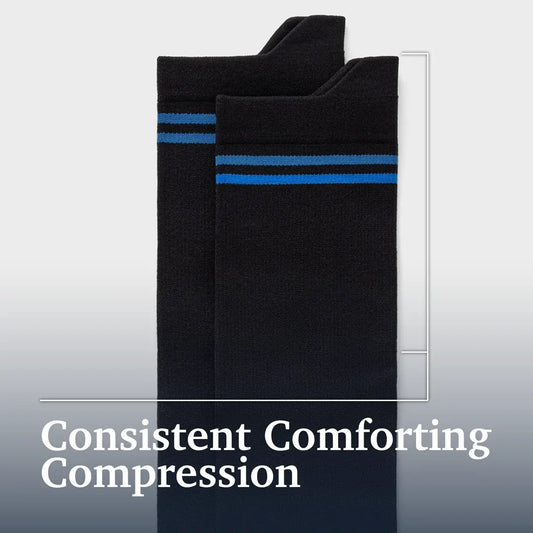
Joe & Bella's compression socks provide 15-20 mmHg graduated compression, which falls within the moderate range. That does not mean 15-20 mmHg is appropriate for every older adult or every medical condition.
If you are considering compression for significant swelling, a diagnosed vascular condition or another health concern, ask a healthcare professional what level is appropriate before choosing a pair.
What Does 15-20 mmHg Compression Mean?
A 15-20 mmHg sock provides moderate graduated compression. It should feel noticeably more supportive than an ordinary sock but is less firm than 20-30 mmHg or higher-compression medical garments.
When deciding whether a compression level works for you, think beyond the number. Ask whether the pressure is appropriate for why you are wearing the socks, whether they fit correctly and whether you can comfortably put them on and wear them for the intended amount of time.
The goal is not to tolerate the strongest sock possible. It is to find an appropriate compression level that is also practical enough to use consistently.
Step 3: Measure Before You Buy
Compression socks should not be sized by guesswork.
Depending on the manufacturer and style, sizing may involve:
- Ankle circumference
- Calf circumference
- Lower-leg length
- Shoe size
For knee-high compression socks, ankle and calf measurements are particularly common.
If your legs tend to swell as the day progresses, taking measurements when swelling is lower, often earlier in the day, may provide a more useful starting point.
Follow the measuring instructions provided by the brand whenever possible. Different manufacturers may ask you to measure in slightly different places.
Step 4: Use the Brand's Own Size Chart
Once you have your measurements, compare them with the specific manufacturer's size chart.
Compression-sock sizing is not universal. A medium from one company may not correspond to a medium from another, and some products rely more heavily on calf and ankle circumference than shoe size.
Do not automatically choose a smaller size because you assume tighter means better compression. The pressure level is built into the garment itself. Wearing the wrong size can make the sock uncomfortable or prevent it from fitting as intended.
If you fall between sizes, follow the manufacturer's guidance or contact the company for help rather than simply sizing down.
Step 5: Choose the Right Length
Compression garments come in several lengths, including ankle, crew, knee-high and thigh-high styles.
For many everyday uses, knee-high compression socks are common because they provide graduated pressure through the lower leg without extending above the knee. Other lengths may be appropriate depending on where support is needed or what a healthcare professional has recommended.
When comparing lengths, consider both the purpose of the compression and how realistic the garment will be to put on.
A longer stocking may provide additional coverage, but it can also require more bending, reaching and fabric manipulation. For someone who already has difficulty dressing, ease of use should be part of the decision.
Step 6: Consider How Easy the Socks Are to Put On
Compression socks are intentionally snug, which can make them more difficult to put on than ordinary socks.
This can be especially important for someone living with:
- Arthritis
- Limited hand dexterity
- Reduced grip strength
- Shoulder limitations
- Back or hip mobility limitations
- Difficulty bending or reaching the feet
Look for features designed to give the wearer a better grip on the sock or make the fabric easier to manage. These may include easy-grab pull tabs, flexible materials or other dressing-focused design features.
Joe & Bella's compression socks include easy-grab features intended to make the dressing process more manageable.
Ease of use isn't a minor detail. If putting on the sock becomes such a difficult part of the morning routine that someone avoids wearing it, the product is not working well for that person's everyday life.
Step 7: Look at Material and Comfort
Compression level and sizing matter, but so does the fabric.
If someone will wear the socks for hours at a time, consider:
- Softness
- Breathability
- Stretch
- Cushioning
- Interior seams
- Overall fabric feel
-
How the cuff feels around the calf
This can be especially important for someone with more sensitive skin.
The top of the sock should stay in place without constantly rolling or bunching. It also should not feel painfully restrictive. If the cuff digs deeply into the skin or the sock repeatedly rolls down, recheck the size and fit.
Common Mistakes When Choosing Compression Socks
A few mistakes can make an otherwise useful pair of compression socks much harder to wear.
Choosing the Strongest Compression Automatically
More compression is not automatically better. Choose a pressure level appropriate for the intended use rather than assuming the highest number will provide the greatest benefit.
Buying Based Only on Shoe Size
For many compression socks, ankle and calf measurements are more informative than shoe size alone. Always check what the manufacturer uses for sizing.
Using a Generic Size Chart
Sizing can vary substantially between brands. Use the chart for the exact product you are considering.
Ignoring Ease of Dressing
A sock may fit perfectly once it is on but still be impractical if the wearer cannot put it on without a major struggle.
Assuming Discomfort Is Normal
Compression socks should feel snug, but significant pain, numbness, tingling or skin changes should not simply be dismissed as something you need to "get used to."
Are Compression Socks Good for Swollen Feet and Ankles?
Compression is sometimes used as part of managing certain types of lower-leg swelling. But swelling can have many causes, and the appropriate response depends on why it is happening.
Do not automatically respond to new or concerning swelling by purchasing stronger compression socks.
Seek medical guidance if swelling is:
- New or unexplained
- Severe
- Painful
- Primarily on one side
- Accompanied by redness or unusual warmth
- Becoming significantly worse
- Associated with shortness of breath or chest symptoms
If you already know why you experience swelling, ask your healthcare professional whether compression is appropriate and what level they recommend.
Can Seniors With Diabetes Wear Compression Socks?
Some people with diabetes may be able to wear compression socks, but diabetes requires additional consideration because it can sometimes involve changes in sensation, skin health or circulation.
Compression socks and diabetic socks are also not the same thing.
Diabetic socks are generally designed around features such as comfort, reduced friction and accommodating sensitive feet. Compression socks are specifically designed to apply pressure.
If you have diabetes, particularly with peripheral neuropathy, reduced sensation, foot wounds, skin changes, known circulation problems or significant swelling, talk with a healthcare professional before choosing compression socks.
Who Should Ask a Healthcare Professional Before Wearing Compression Socks?
Professional guidance is particularly important when compression is being used in connection with a medical condition rather than simply everyday wear.
Consider speaking with your healthcare provider if you have:
- Peripheral artery disease or another known arterial circulation problem
- Severe or unexplained swelling
- Peripheral neuropathy
- Significantly reduced sensation in the feet or legs
- Diabetes with foot complications
- Open sores or wounds
- Significant skin damage
- Complex heart, kidney or vascular conditions
- A recommendation for higher-strength compression
Medical compression should be selected based on the individual and the condition being treated, not simply age or a general assumption that more compression will be helpful.
How to Put On Compression Socks More Easily

Technique can make compression socks considerably easier to manage.
Whenever possible, put them on before significant swelling develops. Rather than trying to pull the entire sock over the foot at once, gather the fabric first and position the foot and heel correctly. Then gradually smooth the sock over the ankle and calf.
Avoid pulling forcefully from the top cuff. Once the sock is in place, smooth out bunching or wrinkles so the fabric lies evenly against the leg.
Easy-grab pull tabs or other dressing features may provide more leverage for someone with limited hand strength.
If compression is appropriate but the socks are consistently too difficult to put on, a compression-sock donning aid may also help.
What If You Can't Reach Your Feet?
Sometimes the problem isn't hand strength. It's bending or reaching.
Someone with limited hip, back or shoulder mobility may be unable to comfortably reach far enough to position a compression sock.
Possible options include:
- Dressing while seated
- Using a compression-sock donning aid
- Trying an appropriate long-handled dressing tool
- Getting assistance from another person
If a particular compression level has been recommended, switching to a much looser sock simply because it is easier to put on may not provide the intended compression. Instead, look for a dressing method or appropriately designed product that makes the correct sock easier to manage.
How Do You Know if Compression Socks Fit Correctly?
A properly selected pair should feel supportive and secure without causing concerning discomfort.
In general, the socks should:
- Match the intended compression level
- Fit the ankle and calf according to the manufacturer's sizing
- Stay in place without excessive rolling or digging
- Feel manageable to put on
- Be comfortable enough for the intended amount of wear
A compression sock should not feel like an ordinary loose sock, but it also should not feel painfully tight.
If the sock is extremely uncomfortable, repeatedly bunches or rolls, or clearly does not match your measurements, reassess the fit rather than assuming that is simply how compression is supposed to feel.
When Should You Remove Compression Socks and Get Advice?
Remove the socks and seek medical advice if you develop concerning symptoms such as:
- Pain
- Numbness
- Tingling
- Significant skin discoloration
- Skin damage
- Worsening swelling
These symptoms may indicate a sizing problem, an inappropriate compression level or another issue that needs evaluation.
Compression Socks vs. Gripper Socks
Compression socks and gripper socks serve very different purposes.
Compression socks apply graduated pressure around the foot and lower leg.
Gripper socks add traction to the bottom of the foot compared with ordinary smooth-soled socks.
One isn't a substitute for the other.
If you are still deciding which type of sock is appropriate, read How to Choose Socks for Seniors: Gripper, Compression and Everyday Options.
If you already know that you want compression, focus on pressure level, proper sizing, comfort and ease of dressing.
How to Choose the Right Compression Socks for a Senior
When comparing options, come back to five questions:
Why are the socks being worn?
Identify the actual reason for compression before choosing a product.
What compression level is appropriate?
Don't automatically choose stronger compression because it sounds more effective.
Do they fit correctly?
Measure the ankle and calf as required and follow the manufacturer's sizing chart.
Can the wearer realistically put them on?
Consider arthritis, grip strength, reaching ability and any easy-on features.
Are they comfortable enough to wear consistently?
Pay attention to fabric, seams, warmth, cuff design and overall fit.
A technically correct compression sock isn't very useful if it stays in the drawer.
Choosing Compression Socks Is About More Than Pressure
The best compression sock isn't simply the strongest one.
For an older adult, the right pair should combine an appropriate compression level with accurate sizing, comfortable materials and a design that is realistic to use as part of an everyday dressing routine.
That means measuring instead of guessing, using the manufacturer's size chart, thinking about ease of dressing and asking for professional guidance when compression is being used to address a medical concern.
Once you know that compression is appropriate, the goal is straightforward: find a pair that provides the intended support and is comfortable and manageable enough to actually wear.
Explore Joe & Bella's 15-20 mmHg Compression Socks to see our available easy-on options.
About the Author:
Nurse Taylor Thoen Donaldson is Joe & Bella's Chief of Customer Happiness and a former geriatric nurse. Taylor worked extensively with older adults as they recovered and prepared to leave the hospital. Known to our customers as "Nurse Taylor," she brings a frontline caregiver's perspective to everything we do, ensuring our products hold up not just in concept, but in the daily reality of dressing someone with limited time, limited mobility, and a lot on the line.
A note from Joe & Bella: Our content is intended for general informational purposes only. While we share insights from our own Nurse Taylor and other health and wellness experts, please know that they are not your healthcare provider and nothing here should be taken as medical advice, diagnosis, or treatment. Every person's situation is different. Please consult your own physician, nurse, or healthcare professional before making any decisions about your health or the care of a loved one.
Frequently Asked Questions (FAQs)
-
Big-Grip No-Slip Compression Socks: 3-PackRegular price $18Regular priceUnit price per
$54Sale price $18Sale