Putting on socks can become much harder with age. Limited mobility, arthritis, hip or knee pain, swelling, and recovery after surgery can all make bending down to reach your feet feel frustrating or even unsafe.
That is where a sock aid can help.
The best sock aid for seniors makes it easier to put on socks with less bending, stretching, or pulling. These tools can support independence, reduce dressing strain, and make everyday routines feel more manageable.
At the same time, a sock aid is not always the best solution for every person. Some seniors do better with easy-on adaptive socks instead of a separate dressing tool. In this guide, we will explain what a sock aid is, who it helps most, which type may be best, and when an easier sock design may be the better option.
If you're looking for a larger guide on choosing the best socks for seniors, we've got you covered! And if you're looking to shop sock aids, we've got you covered.
What Is a Sock Aid?
A sock aid is a dressing tool that helps a person put on socks without having to bend all the way down to their feet. Most sock aids work by holding the sock open so the foot can slide in more easily. Long handles or straps then help pull the sock into place.
Sock aids are especially useful for people who have trouble with:
- Bending
- Reaching
- Gripping
- Balance
- Hip Or Knee Movement
For many seniors, a sock aid can make dressing feel safer and less tiring.
Who Can Benefit From a Sock Aid?
A sock aid can be helpful for many older adults, especially those dealing with physical changes that make dressing harder than it used to be. The best sock aids for seniors are easy to use and don't require any extra equipment.
Seniors who may benefit include people with:
- Arthritis
- Limited Mobility
- Hip Or Knee Pain
- Back Pain
- Swollen Feet Or Ankles
- Stroke Recovery
- One-Handed Dressing Needs
- Post-Surgical Recovery
- Difficulty Reaching The Feet
It can also help caregivers who want to support dressing with less lifting or strain.
Benefits of Using a Sock Aid
The right sock aid can make a simple daily task feel much easier.
Better Independence
Many seniors want to keep dressing on their own for as long as possible. A sock aid can help make that possible by reducing the need for caregiver assistance during one part of the dressing routine.
Less Strain
Putting on socks often requires bending at the waist, reaching toward the feet, and pulling with the hands. A sock aid reduces those motions, which can be especially helpful for people with painful joints or stiffness.
Safer Dressing
If balance is an issue, bending down to put on socks can increase the risk of losing stability. A sock aid can make the process easier and safer by reducing awkward movements.
Easier Daily Routines
Even small dressing tasks can feel exhausting when mobility is limited. A sock aid can make everyday routines quicker and less frustrating.
What Is the Best Sock Aid for Seniors?
The best sock aid for seniors depends on the person’s specific needs. There is not one perfect tool for everyone. The right choice depends on mobility, hand strength, swelling, balance, and the type of socks being worn.
Here are the most useful types to know about.
Best for Everyday Socks: Soft or Flexible Sock Aids
For many seniors, a soft or flexible sock aid is the best starting point. These tools are usually lightweight, easier to handle, and gentle on the skin. They work well with regular everyday socks and are often simpler to use than rigid devices.
These are often best for seniors who have:
- Mild To Moderate Mobility Limitations
- Arthritis
- Painful Bending
- Limited Reach
- Sensitive Skin
Best for Compression Socks: Compression Sock Aids or Stocking Donners
Compression socks are much tighter than regular socks, so they can be harder to put on. A standard sock aid may not be strong enough to handle them.
A compression sock aid or stocking donner is designed specifically for compression garments. These tools help keep the sock open and make it easier to guide the foot into place while protecting the sock’s shape and compression.
These are often best for seniors who wear compression socks for:
- Swelling
- Circulation Support
- Travel
- Long Periods Of Sitting
- Recovery
Best for One-Handed Dressing: One-Handed Sock Aids
Some seniors recovering from stroke or living with one-sided weakness may need a tool that can be used with only one hand. These sock aids are designed to stay stable while the sock is loaded and the foot is placed into it.
These are often best for people with:
- Post-Stroke Weakness
- Hemiplegia
- One-Handed Dressing Needs
- Reduced Grip Strength In One Hand
Best for Swollen Feet or Larger Calves: Wider Sock Aids
Some sock aids are designed with a wider opening or sturdier frame to better accommodate larger feet, wider ankles, or swollen lower legs.
These can be helpful for seniors with:
- Edema
- Lymphedema
- Larger Calves
- Post-Surgical Swelling
- Shoes And Socks That Feel Tight Or Hard To Manage
What Features Should Seniors Look For in a Sock Aid?
When choosing the best sock aid for seniors, look for features that match the person’s actual dressing challenges.
Helpful features may include:
- Long Handles Or Straps for less bending
- Flexible Material for comfort and easier loading
- A Wide Opening for swollen feet or thicker socks
- Non-Slip Or Stable Design for easier setup
- Lightweight Construction for easier handling
- A Shape That Works With Compression Socks if needed
The best tool is not always the most complex one. It is the one that makes daily dressing feel easiest and most manageable.
When a Sock Aid May Not Be the Best Option
A sock aid can be helpful, but it is not always the easiest solution.
Some seniors find that:
- The tool is awkward to set up
- The sock slips off during use
- The handles or straps are hard to grip
- Compression socks still require too much effort
- The process feels too slow or frustrating
In those cases, changing the type of sock may help more than adding a dressing tool.
Easier Alternative: Adaptive Socks
For some seniors, the best alternative to a sock aid is a pair of socks designed to be easier to put on in the first place.
Adaptive socks can be a strong option because they often include features like:
- Pull Tabs
- Stretchier Openings
- Soft, Flexible Fabric
- A Less Restrictive Fit
- Non-Slip Grips
These features can make socks easier to pull on without needing a separate device.
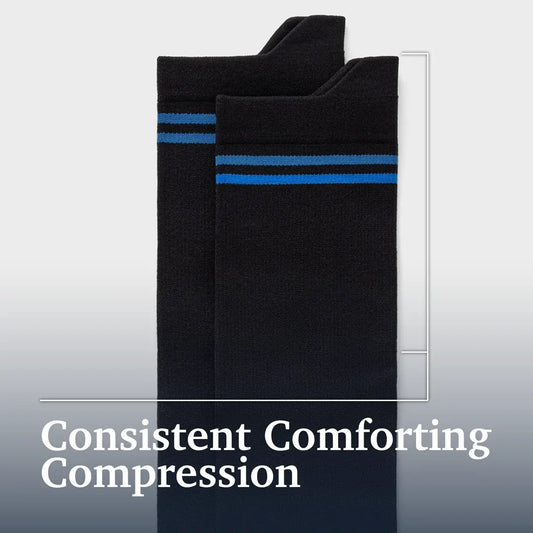
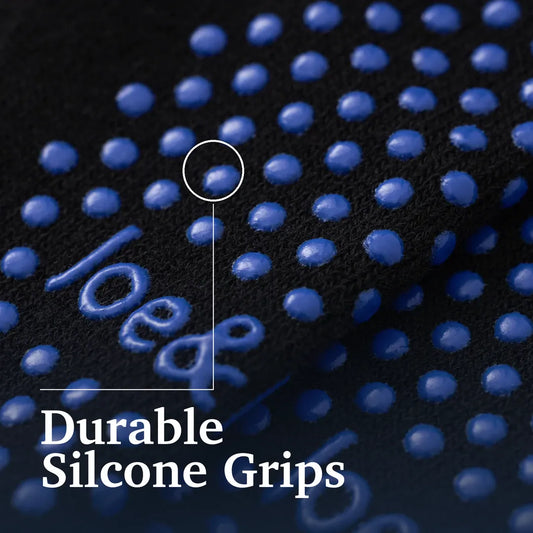
At Joe & Bella, our Everyday Gripper Socks are designed to be easier to put on and more comfortable for everyday wear. They feature pull tabs, soft fabric, and non-slip grips to support easier dressing and safer movement at home.
For seniors who find a sock aid awkward or difficult, easy-on socks may be a more practical everyday solution.
Sock Aid vs. Easy-On Socks: Which Is Better?
This depends on the person.
A sock aid may be better if someone:
- Already likes their current socks
- Needs help mainly with bending and reaching
- Uses compression socks and needs a specific dressing tool
- Wants to keep using regular socks with a device
Easy-on adaptive socks may be better if someone:
- Struggles to manage a separate tool
- Has limited hand strength
- Wants the simplest daily routine possible
- Needs both comfort and traction
- Wants socks that are easier to wear from the start
For many seniors, the easiest answer is not always a device. Sometimes it is simply a better sock.
How to Choose the Best Sock Aid for Seniors
If you are shopping for yourself, a parent, or a loved one, start by asking a few basic questions:
- Is The Main Issue Bending Or Reaching?
- Are Compression Socks Involved?
- Is There Swelling In The Feet Or Ankles?
- Does The Person Have Use Of Both Hands?
- Would A Simpler Sock Design Be Easier Than A Tool?
Those answers will usually point you in the right direction.
Final Thoughts
The best sock aid for seniors is the one that matches the person’s actual needs and makes dressing feel easier, safer, and less frustrating. For some people, that will be a soft sock aid with long handles. For others, it may be a compression stocking aid or a one-handed device.
And for some, the best answer may not be a sock aid at all. Easy-on adaptive socks can sometimes be the simpler and more comfortable solution.
If you are looking for socks that are easier to put on and comfortable for everyday wear, explore Joe & Bella’s gripper socks, compression socks, and hospital socks for supportive options designed with comfort, safety, and easier dressing in mind. And if you're interested in looking at additional adaptive clothing for seniors, we offer a range of tops and bottoms that make dressing easier.
Frequently Asked Questions (FAQs)
-
Big-Grip No-Slip Compression Socks: 3-PackRegular price $36Regular priceUnit price per
$54Sale price $36Sale -
Everyday Gripper Socks 3-PackRegular price $44Regular priceUnit price per
$54Sale price $44Sale