By Jimmy Zollo, CEO of Joe & Bella

A recent article from the Stanford Center on Longevity about the “longevity market” explored a question that more people should be asking: what does it actually take to build products that help older adults live with more dignity, comfort, and independence? While I helped answer this question in the original article, I wanted to discuss it further here. The article also touched on something I think is often missed in those conversations. Older adults do not stop caring about identity, style, or self-respect just because dressing, mobility, or everyday routines get harder.
That idea is deeply personal to me.
Joe & Bella was not born out of a market map or a business trend. It started with my grandmother. She had always cared about how she looked. She took pride in being well dressed. Then, as dressing became harder and more painful, I watched something much deeper than a wardrobe problem unfold. I watched a woman who cared about how she presented herself face pain and frustration during one of the most personal parts of the day. In the Stanford article, I shared that I watched my once well-dressed grandmother scream in pain while getting ready for visitors. That moment stayed with me.
It changed how I thought about clothing.
The Problem With How Aging Products Are Often Designed

Too often, products for older adults are designed around function alone. The assumption seems to be that if a product is useful enough, people will accept looking or feeling medicalized. But that is not how real life works.
A lot of products aimed at older adults still miss the emotional reality of aging. They solve a problem on paper, but they do not respect the person using them. When a product makes someone feel infantilized, overly dependent, or unlike themselves, even a functional solution can fall flat.
That is especially true in clothing. If something is easier to put on but makes the wearer feel stripped of style, identity, or dignity, it is not a complete solution.
Why Dressing Difficulty Changes More Than a Routine
Getting dressed is not a small thing. It is tied to routine, confidence, comfort, and identity. When clothing becomes painful to put on, hard to fasten, or frustrating to manage, the impact goes far beyond convenience.
That is what I saw with my grandmother.
As dressing became more difficult, it was not just the physical pain that stood out. It was the emotional effect. Something that had once been automatic and personal became stressful and discouraging. And when that happens, it changes more than the act of getting dressed. It can affect whether someone wants to leave the house, see people, or participate in everyday life.
It can also affect the relationship between a loved one and the caregiver helping them. When every morning begins with frustration, discomfort, or a struggle over clothes, that tension adds up quickly.
What Good Adaptive Clothing for Older Adults Should Actually Do

That is why I believe adaptive clothing for older adults matters more than ever.
Good adaptive clothing should not look like something pulled from an old medical catalog. It should not ask someone to trade style for function. It should make dressing easier while still feeling familiar, dignified, and wearable. It should reduce effort without making the wearer feel reduced.
That is the principle we built around at Joe & Bella. Small design changes can remove major daily barriers.
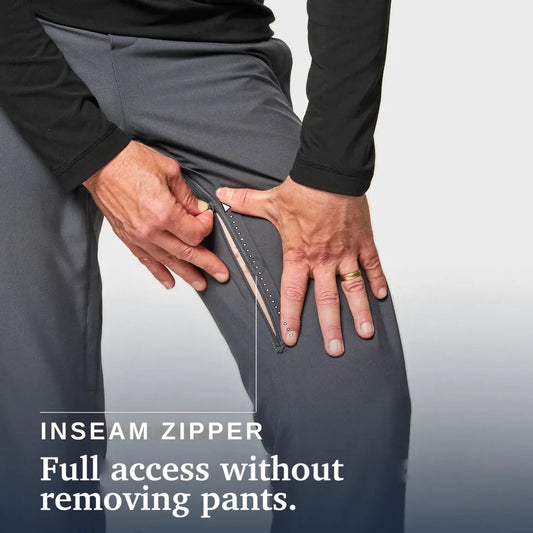
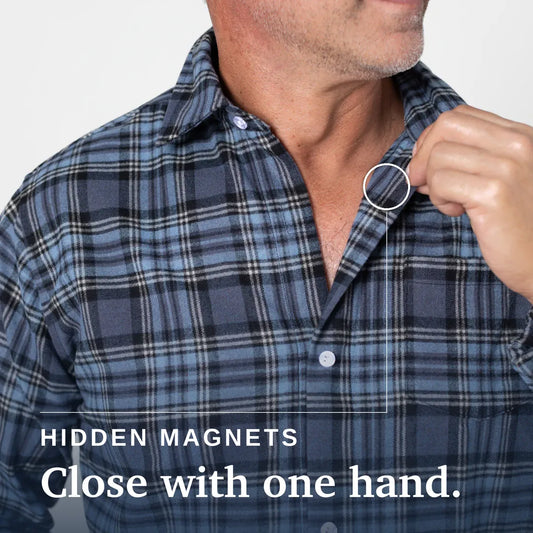
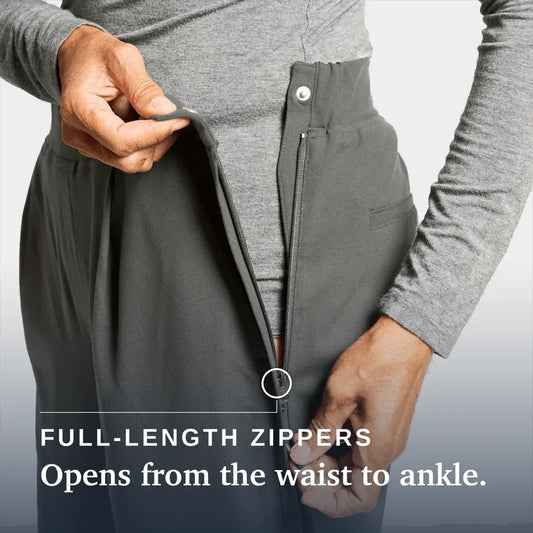
For some people, that means magnetic shirts instead of traditional button-downs. For others, it means pants with side zippers that are easier to manage for dressing and toileting. For others, it means fabrics that feel softer on sensitive skin, or clothing that works better when getting dressed in a chair or with help from a caregiver.
These may sound like small details, but in daily life, they are not small at all.
If you are a caregiver, you know that the friction in a day often comes from repeated little struggles. A shirt that is hard to close. Pants that make toileting more complicated. A jacket that hurts to put on. Those things add up. When dressing becomes easier, mornings often become calmer. Caregiving can feel a little less rushed, a little less physical, and a little less emotionally exhausting.
And if you are the one getting dressed, easier clothing can mean more than convenience. It can mean less pain, less frustration, and more confidence. It can mean feeling comfortable going out, seeing people, or just getting through a daily routine with a little more ease.
Why This Matters Even More Now
This matters now more than ever because the aging population is not a future trend. It is already here.
More families are helping older loved ones navigate mobility changes, dressing challenges, and the emotional realities of needing more support. At the same time, caregiving systems are stretched, and more of the day-to-day burden is falling on family members.
That reality means we need better everyday solutions, not just bigger conversations.
When people talk about the future of aging, they often jump to healthcare systems, reimbursement, AI, or robotics. Those conversations matter. But so do the products people interact with every morning when they wake up and get dressed.
Adaptive apparel may not sound as flashy as new tech, but it solves a real and immediate problem. It helps people move through daily life with more comfort, dignity, and independence.
Better Design Is Better Care
To me, that is not niche. That is essential.
The brands and products that really matter will be the ones that understand something simple: older adults are still themselves. They still care about how they feel. They still care about how they look. They still want to be treated with dignity.
If clothing can help make that easier, then it is not just apparel. It is part of better care.
-
CareZips® Men's Access PantsRegular price $88Regular priceUnit price per
$108Sale price $88Sale -
Everyday Magnetic Flannel for MenRegular price $78Regular priceUnit price per
$98Sale price $78Sale -
Everyday Side-Zip Pant for WomenRegular price $78Regular priceUnit price per
$108Sale price $78Sale -
HoodEase®: The Magnetic Zip-Up HoodieRegular price $98Regular priceUnit price per
$108Sale price $98Sale