Most people do not think much about getting dressed until it becomes difficult.
For many older adults, dressing grows harder gradually. A parent may take longer to button a shirt, struggle to pull on pants, avoid certain outfits, or ask for help with something they used to do independently. For caregivers, these changes can quietly become one of the most stressful parts of the day.
Helping an elderly parent get dressed is about more than clothing. It involves mobility, pain, balance, energy, privacy, and dignity. When the process becomes harder, the goal is not just to get clothes on. It is to make the routine safer, calmer, and less frustrating for everyone involved.
Why Dressing Gets Harder as People Age
Dressing requires more physical effort than people often realize. A person may need to:
- Raise their arms
- Reach behind the body
- Bend at the waist
- Balance on one leg
- Grip small fasteners
- Pull against tight fabric
- Tolerate pressure points while seated
As people age, several factors can make those movements harder, including:
- Arthritis
- Joint stiffness
- Back pain
- Shoulder pain
- Limited mobility
- Weakness after illness or hospitalization
- Swelling
- Balance issues
- Reduced hand strength
- Vision changes
Sometimes the change is physical. Sometimes it is cognitive. Often, it is both.
Common Signs Dressing Is Becoming a Problem
Caregivers often notice patterns before they hear a loved one say anything directly. Signs may include:
- Taking much longer to get dressed
- Avoiding button-down shirts or harder-to-manage pants
- Wearing the same easy outfit repeatedly
- Asking for help with buttons, zippers, or shoes
- Becoming frustrated during dressing
- Sitting down more often during the process
- Avoiding outings that require getting ready
- Complaining that clothes feel uncomfortable
When these signs appear, it usually means the current clothing or routine is no longer working well.
How Caregivers Can Make Dressing Easier
Small changes can make a big difference.
Let Safety Come First
If balance is an issue, dressing while seated is often safer than dressing while standing. A stable chair can reduce fall risk and make it easier to manage pants, socks, and shoes.
Break the Task Into Steps
Instead of treating dressing like one big routine, think through where the actual difficulty is. Is it:
- Pulling a shirt over the head?
- Reaching back to fasten a bra?
- Managing waistband closures?
- Bending down for socks?
- Handling buttons?
Once you identify the real point of friction, the solution becomes much easier to find.
Allow Extra Time
Rushing makes dressing harder. Many older adults need a slower pace, especially in the morning when stiffness, fatigue, or pain may be worse. A little extra time can reduce frustration for both the caregiver and the parent.
Let Them Stay Involved
Even if a loved one needs help, it is still important to preserve independence where possible. That may mean:
- Letting them choose between two outfits
- Having them put one arm into a sleeve
- Letting them pull up pants after positioning
- Allowing them to adjust a collar or waistband
It does not need to be perfect. Staying involved matters.
Clothing Changes That Help
Sometimes the easiest way to improve dressing is to improve the clothing itself. Helpful features often include:
- Magnetic closures instead of small buttons
- Elastic waistbands instead of rigid fasteners
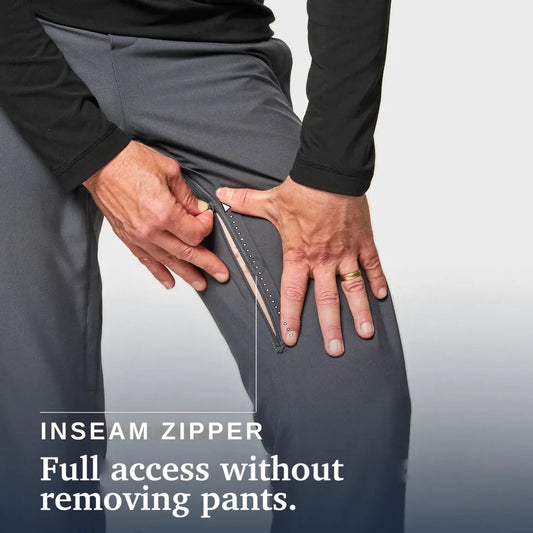
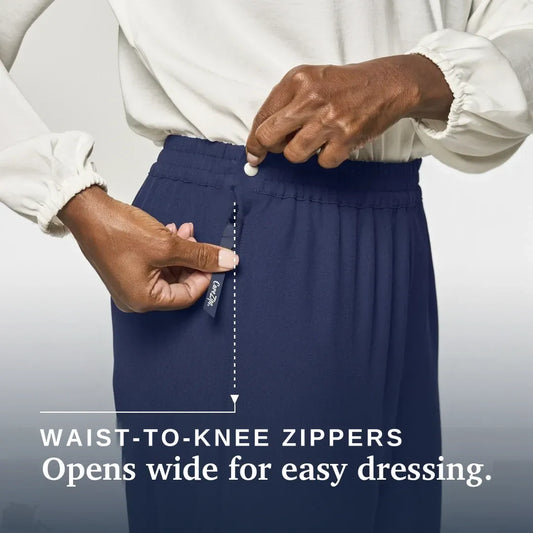
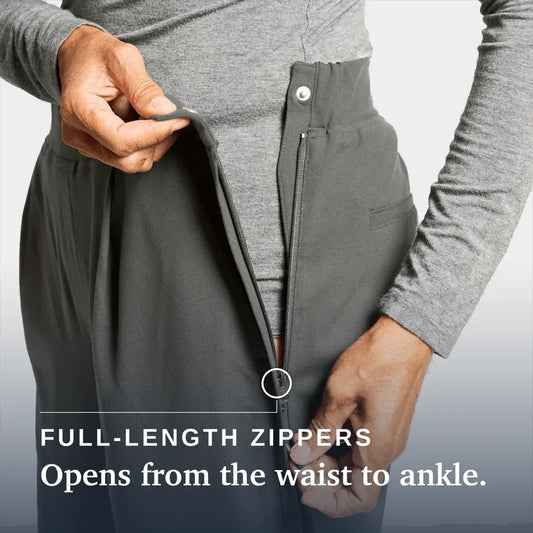
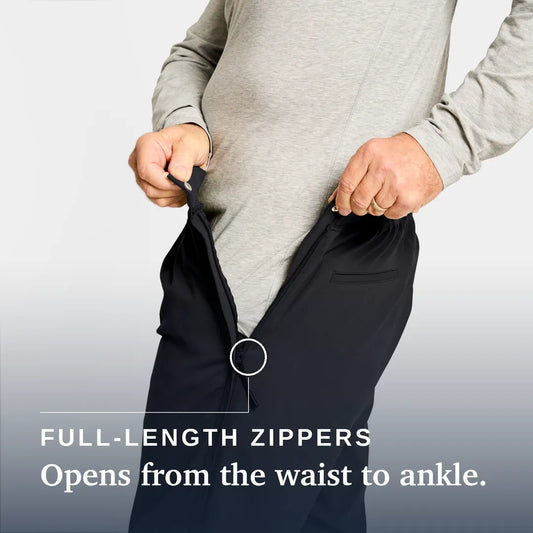
- Side-zip or easier-access pants
- Soft fabrics
- Stretch for movement
- Wider openings
- Shoes that slip on more easily
These changes can turn daily dressing from a struggle into something more manageable.
What Older Adults Often Need Most From Clothing
The best easy dressing clothes for older adults usually do not look medical. They just work better. Most people want clothing that:
- Feels familiar
- Looks like normal everyday apparel
- Is easier to manage
- Does not pinch, scratch, or pull
- Supports comfort while seated or moving
- Helps them feel like themselves
That last point matters more than many caregivers realize. People are more willing to wear clothing that still matches their sense of style and identity.
When Adaptive Clothing for Seniors Makes Sense
Adaptive clothing for seniors can help when dressing has become physically hard, emotionally stressful, or both. It may be worth considering if your parent:
- Regularly struggles with buttons or zippers
- Needs much more help dressing than before
- Avoids favorite clothes because they are too hard to manage
- Gets upset or embarrassed during dressing
- Has toileting difficulties related to pants or closures
- Is dealing with arthritis, limited mobility, or weakness
Adaptive clothing for seniors does not have to mean clinical clothing. In many cases, it simply means better-designed everyday clothes.
Dignity Matters as Much as Ease
Helping a parent get dressed can feel emotionally complicated. It is a deeply personal task, and many older adults feel vulnerable when they need help. A few simple habits can protect dignity:
- Explain what you are doing
- Ask permission before stepping in
- Keep them covered when possible
- Avoid rushing
- Let them make choices where they can
- Speak respectfully and directly
Dressing may be routine, but it is never insignificant. It is closely tied to identity, privacy, and confidence.
Final Thoughts
If getting dressed has become harder for your parent, it does not mean you are doing something wrong. It usually means their needs have changed and the routine needs to change with them.
The best caregiver dressing help often comes from a combination of patience, better clothing choices, simpler routines, and a focus on dignity. When those things come together, daily dressing becomes less stressful and more manageable for everyone involved.
Looking for adaptive clothing that combines ease with everyday style? Explore our collection at joeandbella.com and discover dressing solutions designed for comfort, independence, and dignity.
About the Author
JImmy Zollo is the co-founder of Joe & Bella, the first contemporary adaptive apparel brand for older adults. He spent nearly a decade caring for and advocating for both of his grandparents. Jimmy previously conducted aging research on behalf of AARP. He's the recipient of the Turn the Page on Age Award and the John Hopper Impact Award for his work advocating for aging adults.
You can read more from Jimmy. Here are some additional learnings he gained after caring for his parents in assisted living.
Frequently Asked Questions (FAQs)
-
CareZips® Men's Access PantsRegular price $98Regular priceUnit price per
$108Sale price $98Sale -
CareZips® Women's Access PantsRegular price $88Regular priceUnit price per
$108Sale price $88Sale -
Everyday Magnetic Flannel for WomenRegular price $88Regular priceUnit price per
$98Sale price $88Sale -
Everyday Magnetic Button-Down for Men | Tailored-FitRegular price $88Regular priceUnit price per
$98Sale price $88Sale -
Everyday Side-Zip Pant for WomenRegular price $88Regular priceUnit price per
$108Sale price $88Sale -
Everyday Side-Zip Pants for MenRegular price $88Regular priceUnit price per
$108Sale price $88Sale -
HoodEase®: The Magnetic Zip-Up HoodieRegular price $98Regular priceUnit price per
$108Sale price $98Sale -
HoodEase®: The Magnetic Zip-Up Hoodie for WomenRegular price $98Regular priceUnit price per
$108Sale price $98Sale